
Screen annotation tools draw directly over everything on your desktop, so you can circle a button in a demo video, sketch an idea during a call, or mark up a screenshot without opening an image editor. On Linux, several free tools do this well, and each takes a different approach: a GNOME extension, a KDE effect built into the desktop, and three standalone apps.
Every tool below was checked against its current upstream source, and the install commands were verified against current package repositories. Pick by desktop first: GNOME users get the best experience from Draw On Gnome, KDE Plasma ships Mouse Mark already, and Gromit-MPX works everywhere else.
Tools covered here:
- Draw On Gnome (GNOME extension)
- Mouse Mark (a KDE Plasma effect)
- Pylote
- Gromit-MPX
- ScreenPen
Draw On Gnome (GNOME Extension)
It supports colors, shapes, line width, dashed lines, images, and saving your drawing as SVG or PNG. Press Super + Alt + D to start drawing and press it again to return to your desktop. While drawing, press Ctrl + F1 to see every shortcut.
The original Draw On Your Screen extension is no longer maintained. Its extensions.gnome.org page now points readers to Draw On Gnome, a maintained fork that currently supports GNOME 46 through 50.
Installation
On GNOME 46 through 50, install it directly from the GNOME Extensions website. If you use an older GNOME version (down to 3.24), use the project’s install script instead, which detects your version automatically:
bash <(wget -qO- https://raw.githubusercontent.com/daveprowse/scripts/refs/heads/main/dog-install.sh)
After installing, log out and back in, then enable the extension from the Extensions app. If you do not have the Extensions app yet:
sudo apt install gnome-shell-extension-manager
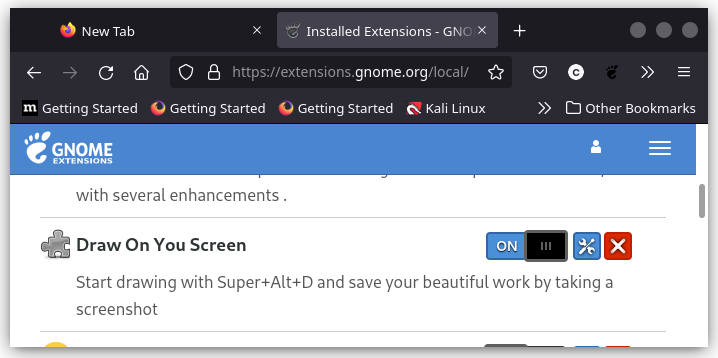
Find Draw On Gnome in the Extensions app, switch it on, and test it with Super + Alt + D.
Usage
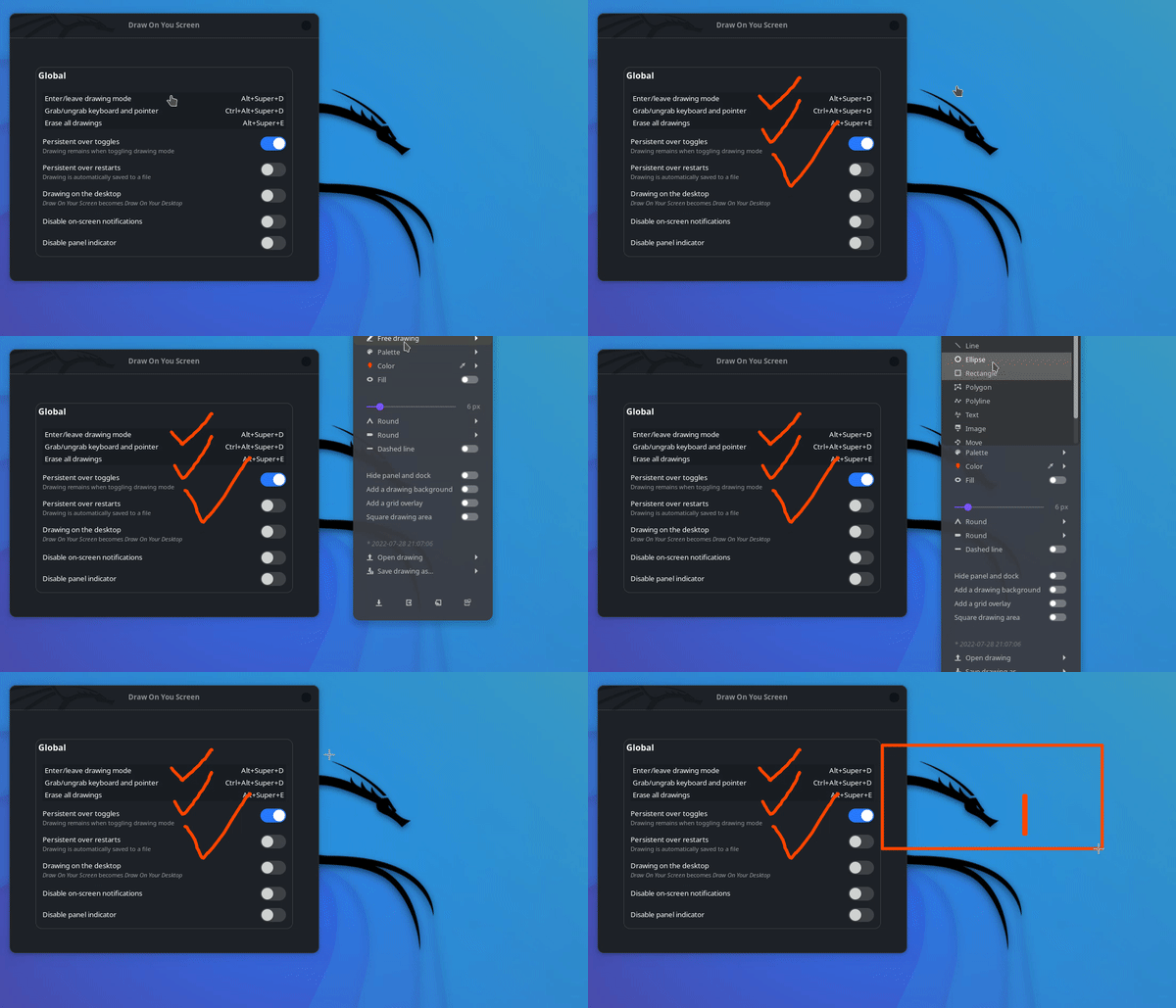
The overlay disappears as soon as you press the toggle again, so you can annotate a window without leaving it in your screenshots.
Mouse Mark (The KDE Effect)
KDE Plasma ships its own screen drawing effect, so KDE users need no extra install.
Mouse Mark is a desktop effect in KDE Plasma, disabled by default, and there is nothing to download. You only enable it.
Open System Settings → Workspace Behavior → Desktop Effects, search for “mouse mark”, and enable it.
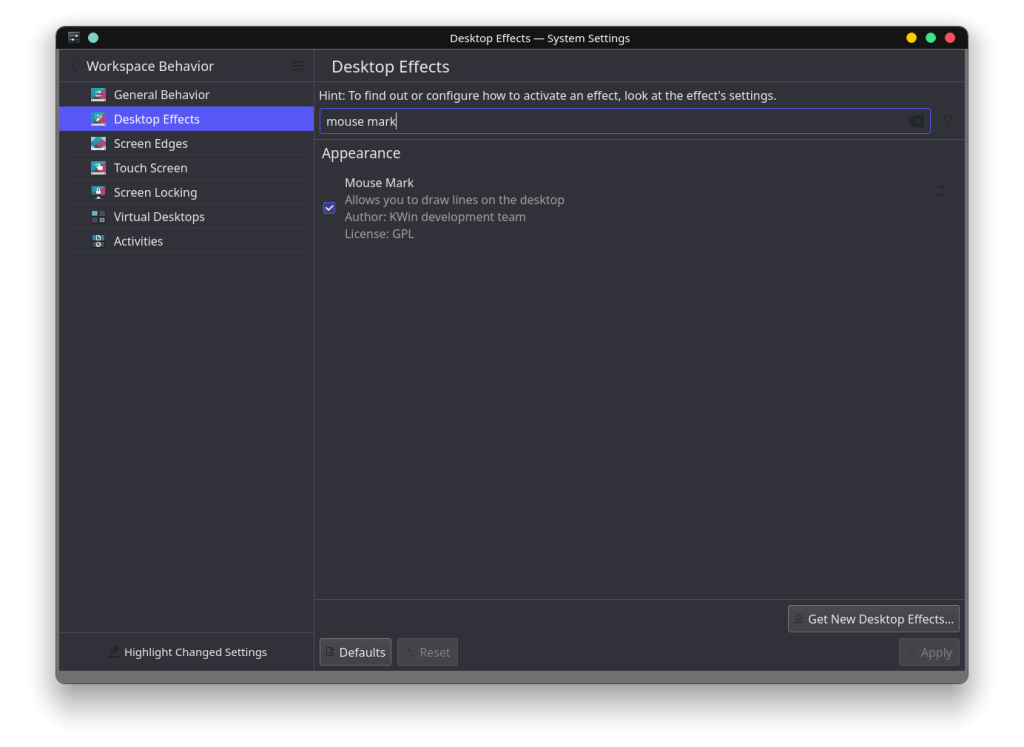
Hold Shift + Super and move the mouse to draw. To clean up, press Shift + Super + F11 to clear all marks or Shift + Super + F12 to erase the last one.
The color and line width are configurable from the effect’s settings.
Usage
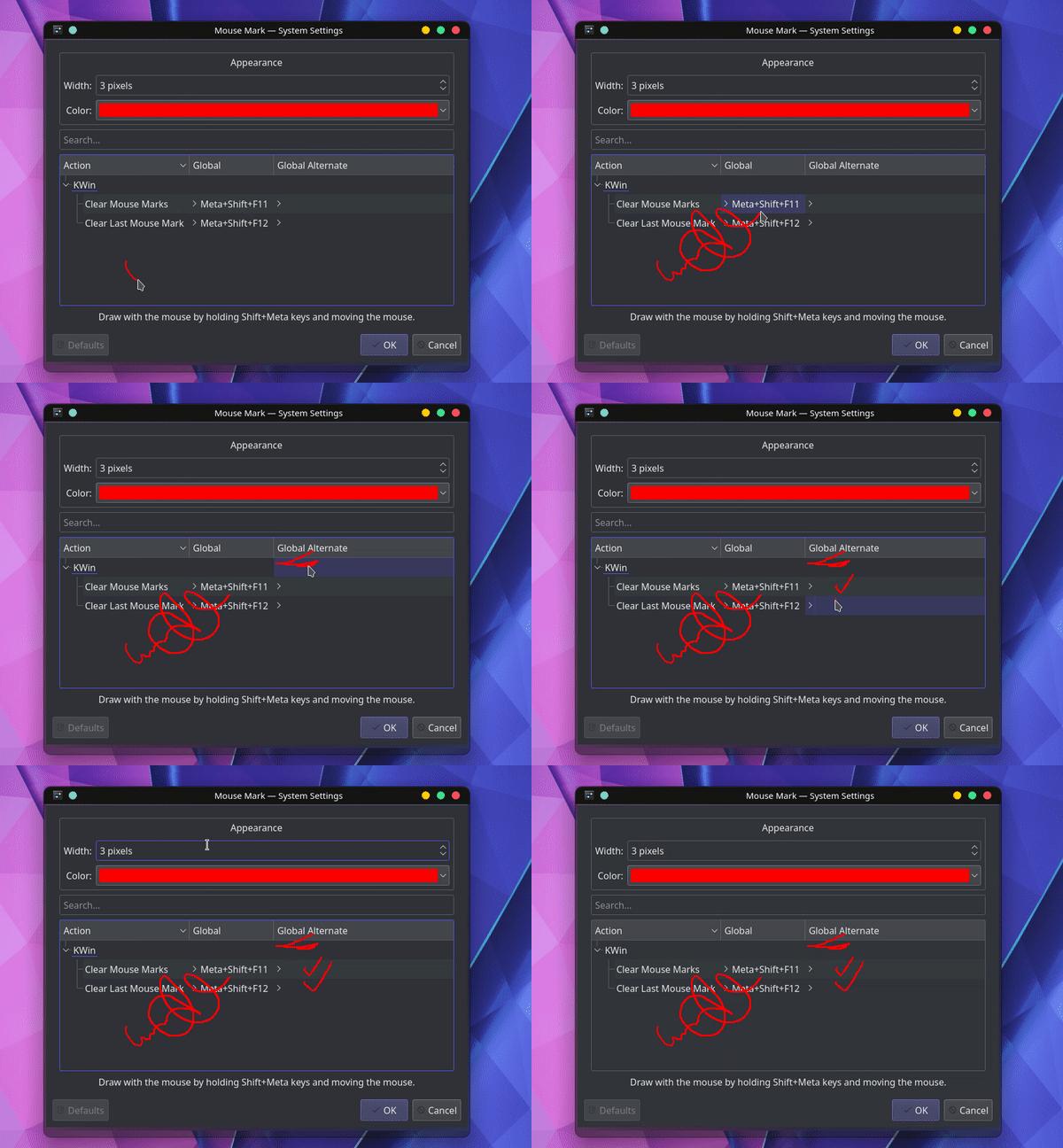
Mouse Mark only does freehand strokes, so there are no shapes, text, or image export. For anything richer, use one of the standalone tools below.
Pylote
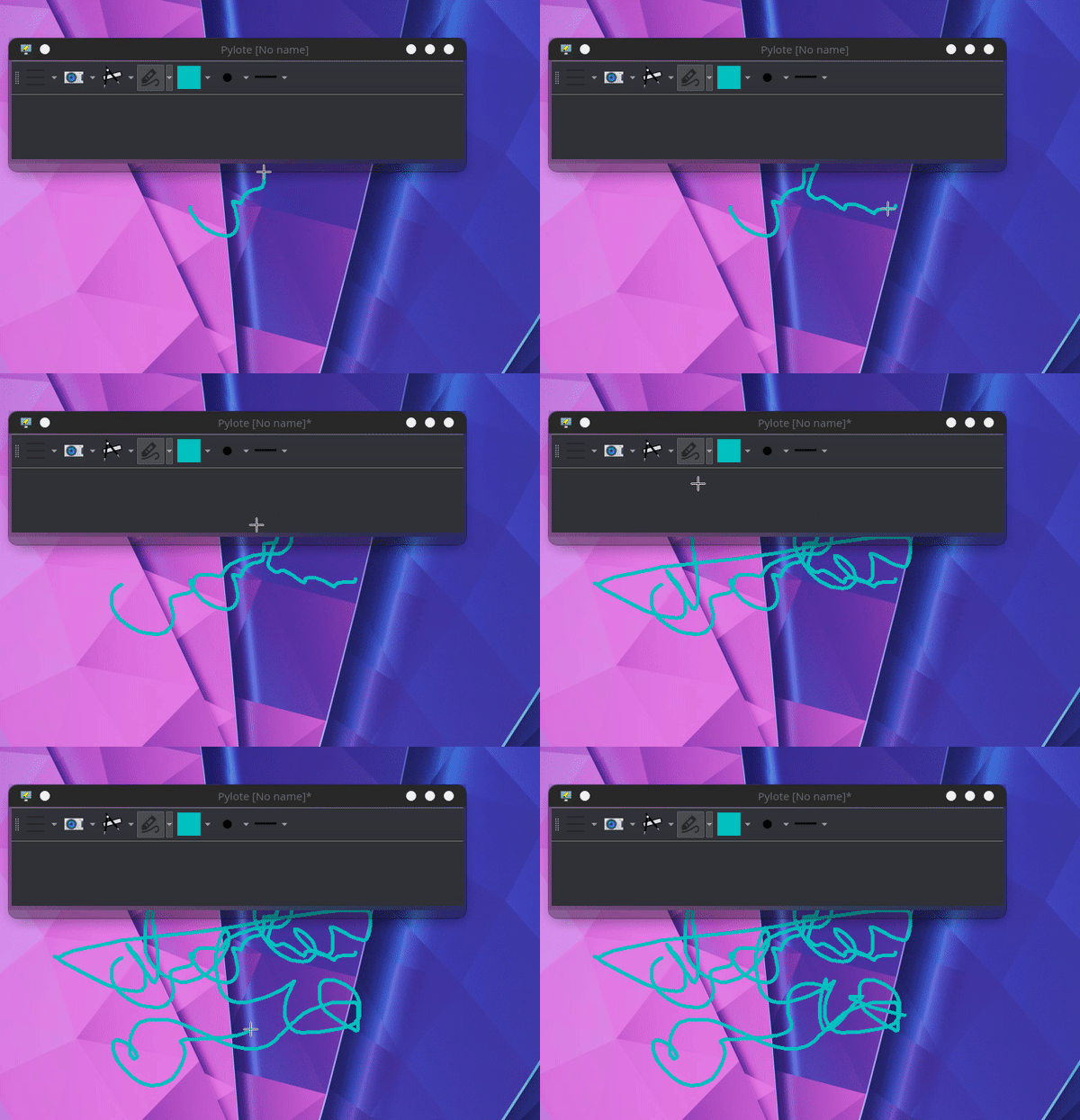
Pylote is a free Python and PyQt5 application aimed at teaching. When it launches, it takes a snapshot of your screen and floats a toolbox above it, so you can draw geometry figures, annotate, and save snapshots. The download has not been updated recently, but we confirmed the current archive still launches fine on Python 3 with today’s PyQt5 packages.
Installation
Install the dependencies first (Ubuntu 20.04 and later):
sudo apt install python3-pyqt5 python3-pyqt5.qtwebengine python3-pyqt5.qtsvg
Then fetch the Pylote archive:
wget http://pascal.peter.free.fr/wikiuploads/pylote.tar.gz
Extract it:
tar -xvzf pylote.tar.gz
Note that the original page shows this command with an en dash before the flags, which fails when pasted. Use the plain hyphen shown above.
Enter the folder and launch the app:
cd pylote
python3 pylote.pyw
To avoid retyping this, open Pylote’s hamburger menu, choose create a launcher, pick Desktop as the directory, and click Ok. You can then start it like any other app.
Working
Gromit-MPX
Gromit-MPX, short for “GRaphics Over MIscellaneous Things – Multi-Pointer-eXtension”, is an annotation tool for Unix desktops. It runs under X11 on any desktop environment and under Wayland through XWayland, and development is active.
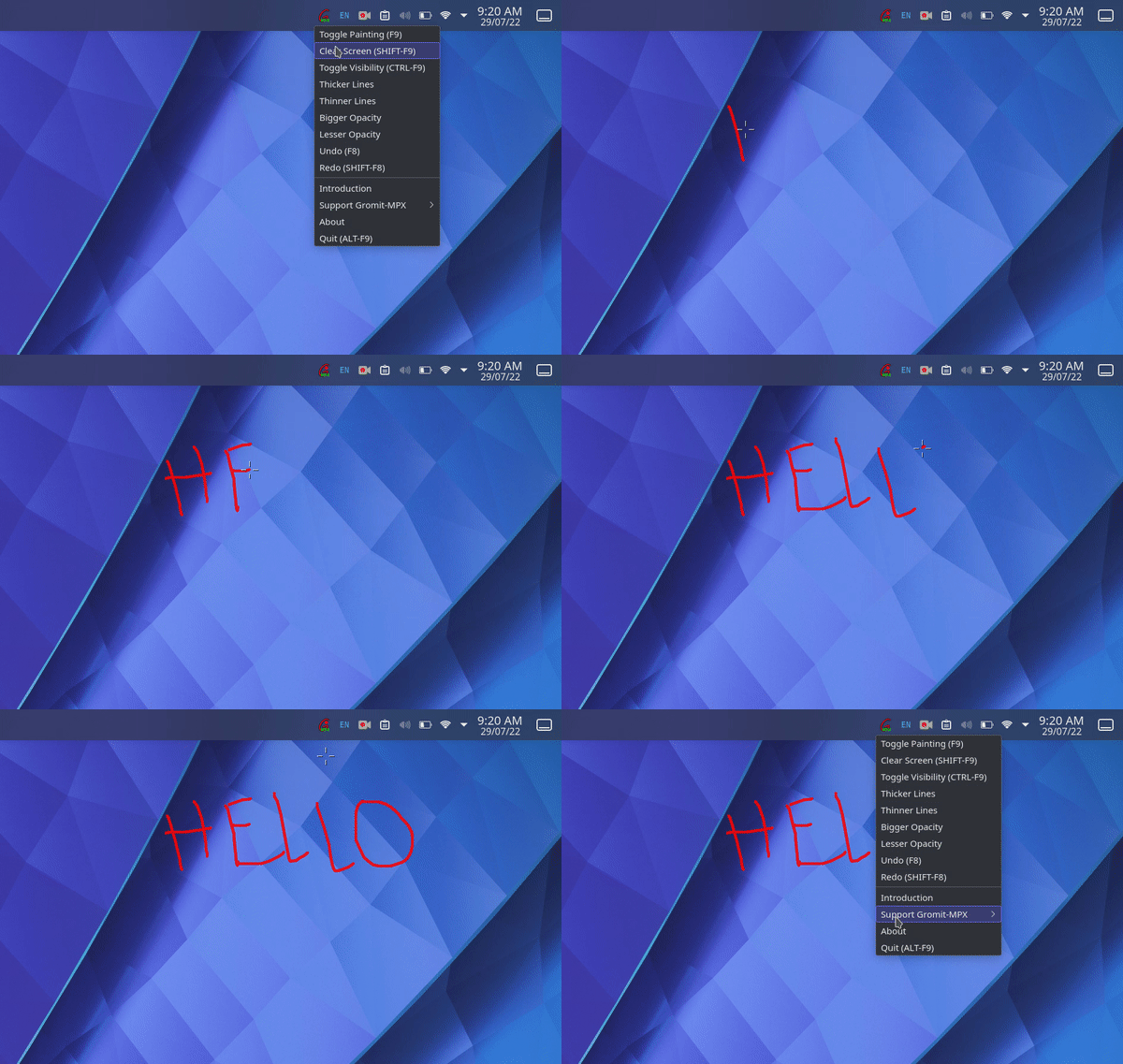
Drawing, undo and redo, opacity, and per-button tool configuration all work through hotkeys, so no window covers what you are presenting. The upstream README documents the full key list.
Installation
sudo apt install gromit-mpx
OR
using Flatpak, which usually carries a newer release than the distro archive:
flatpak install flathub net.christianbeier.Gromit-MPX
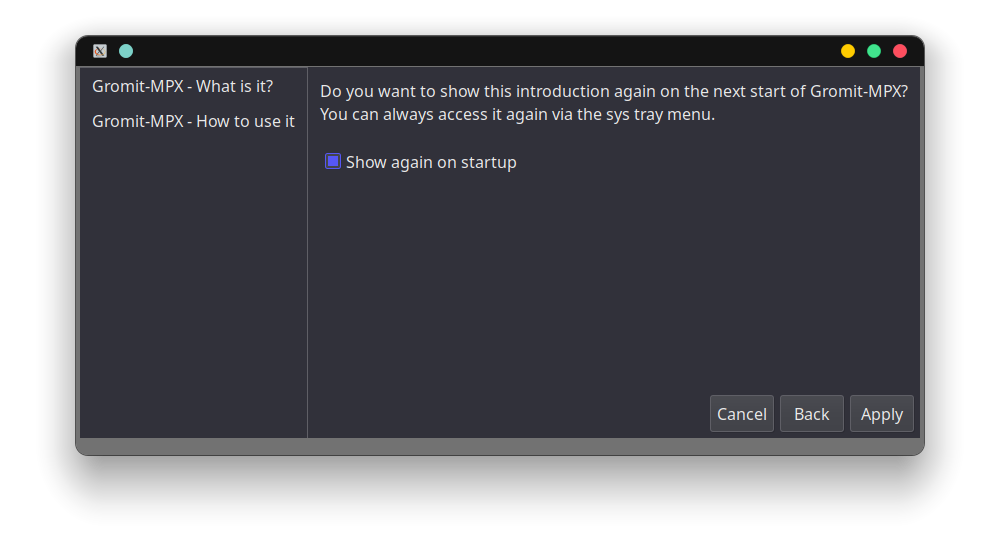
After installation, search for Gromit-MPX in your applications. During the initial setup you can configure it to start automatically if you will need it often. By default it grabs F9 to toggle drawing and F8 to clear the screen, and on XFCE those keys may conflict with workspace shortcuts, which the tool detects and adjusts.
Usage
ScreenPen
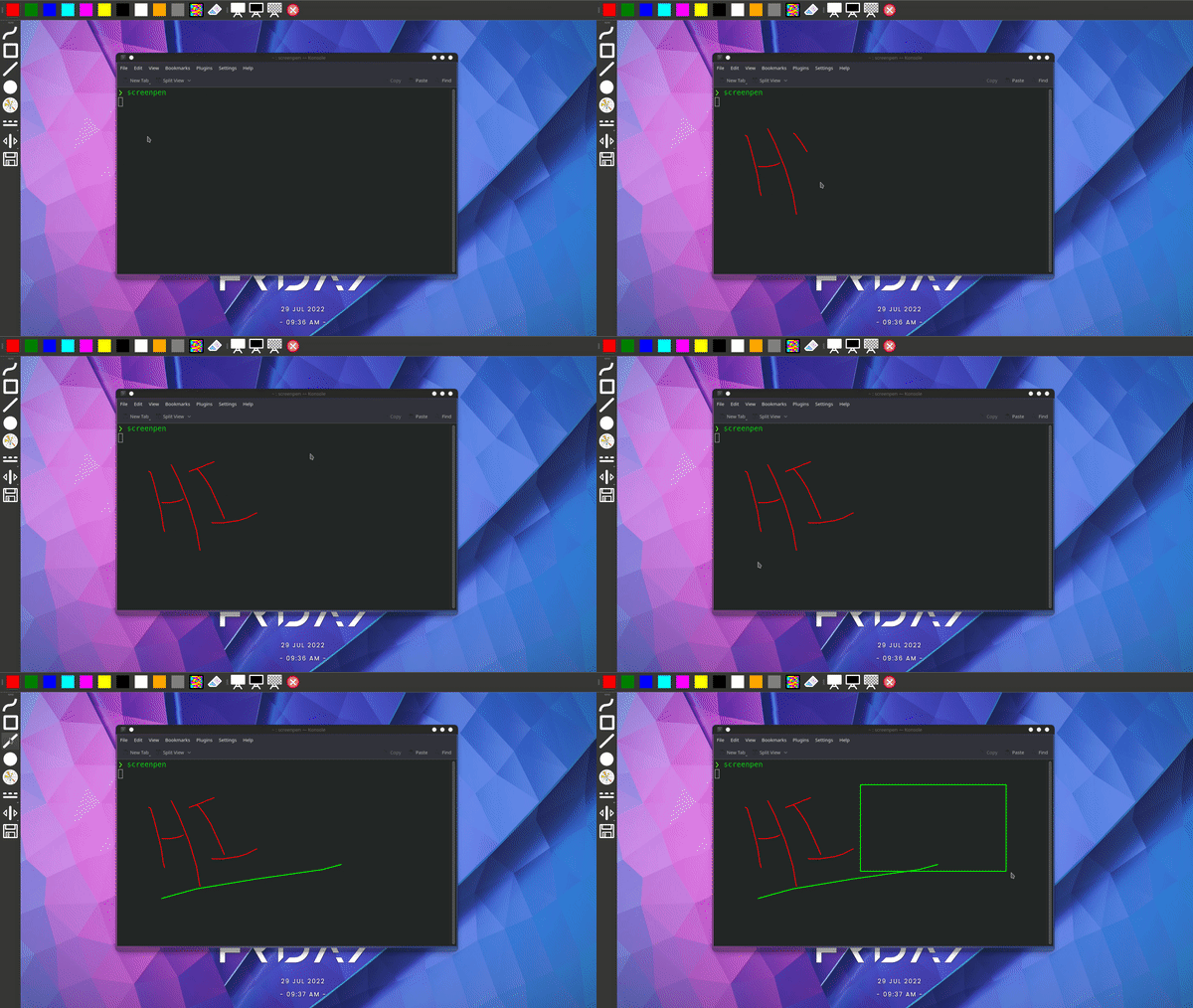
ScreenPen is a free, open-source, cross-platform annotation tool. Alongside lines and rectangles it can paste matplotlib charts straight onto the screen, which is handy when you walk someone through data live. The last release dates from early 2024, so treat it as stable but slowly maintained.
Installation
You need Python 3 and pip, plus PyQt5 from your distribution’s packages so pip does not try to build Qt from source:
sudo apt install python3-pip python3-pyqt5 python3-pyqt5.qtsvg
pip install screenpen --break-system-packages
On distributions that enforce PEP 668 externally-managed environments, install into a virtual environment instead:
python3 -m venv --system-site-packages ~/screenpen-env
~/screenpen-env/bin/pip install screenpen
~/screenpen-env/bin/screenpen
If ScreenPen reports that your window manager does not support live transparency, run it again with a hyphen followed by t as the flag to force a transparent overlay.
Usage
Conclusion
For GNOME, Draw On Gnome gives you the most complete toolkit. KDE users already have Mouse Mark one settings toggle away. Everywhere else, Gromit-MPX is the dependable cross-desktop choice, while Pylote and ScreenPen suit teaching and chart-heavy walkthroughs.