

The No Wi-Fi Adapter Found message means Ubuntu has no usable wireless device to show in Settings. Start by finding out whether the kernel can see the hardware, then check the driver, radio block, and firmware instead of installing a driver package by guesswork.
Start with a temporary connection
Use Ethernet, USB tethering, or another connection before you update packages or fetch firmware. Keep that connection available until Wi-Fi reconnects after a reboot.
Identify the adapter before changing anything
The Ubuntu wireless troubleshooter separates internal PCI devices from USB adapters, so identify how your adapter connects before you change anything.
Check the network device
Run lshw first. It shows whether Ubuntu has created a wireless network device and, when available, the driver attached to it.
sudo lshw -C network
Look for a section with Wireless interface. Copy the product name, vendor, logical name, and configuration line before moving on.
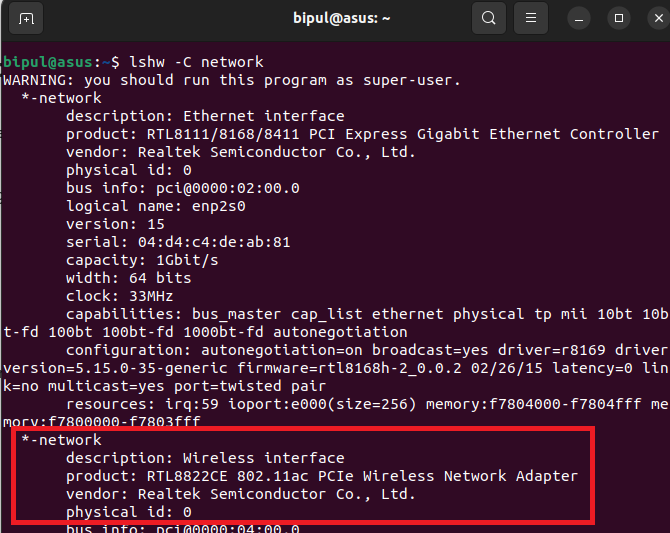
If lshw lists an interface, do not install a random vendor driver yet. Check the radio state and the driver binding first.
Check an internal PCI adapter
Most laptop adapters are PCI devices, and this command prints the device ID plus the kernel driver associated with the network controller.
lspci -k | grep -A 3 -i network
Save the vendor and device ID in brackets, such as 8086:51f0, together with the Kernel driver in use line because the ID is more dependable than a marketing name for vendor support or an Ubuntu bug report.
Check a USB adapter
For a dongle, use lsusb. Disconnect and reconnect it once if no likely wireless device appears, then run the command again.
lsusb
A device that appears in lspci or lsusb but not in lshw usually needs driver or firmware investigation. A device missing from both hardware lists points to a physical connection, firmware setting, or hardware fault rather than a NetworkManager setting.
Check whether Wi-Fi is blocked
A detected adapter can still be unavailable when the radio is blocked. Check both the soft and hard states before changing modules.
rfkill list
When Soft blocked says yes, run the command below. A hard block is controlled by a laptop switch, a function key, firmware, or airplane mode and cannot be cleared by rfkill.
sudo rfkill unblock wifi
Open Settings after unblocking to confirm that the Wi-Fi panel returns and, if it does, connect normally and keep the command output with your support notes.
Refresh Ubuntu packages and firmware
Ubuntu ships many wireless drivers and firmware files through its normal packages, so update the package lists and installed packages before you try a vendor-specific workaround.
sudo apt update && sudo apt full-upgrade
After the update, restart and repeat the lshw and rfkill checks, then inspect current boot messages with dmesg for the exact device ID if Ubuntu still cannot load firmware.
sudo dmesg | grep -iE 'wifi|wlan|firmware|iwlwifi|rtw|brcm'
Intel documents iwlwifi firmware separately from the Linux kernel driver, so a detected Intel controller may need a current linux-firmware package instead of a copied file from an unrelated repository.
Use the right fix for the evidence
The diagnostic result decides the next move and prevents a temporary radio block from becoming a manual driver-installation problem.
| What you find | What to do next |
|---|---|
| Wireless interface appears in lshw and rfkill is soft-blocked | Unblock Wi-Fi, then reopen Settings. |
| Adapter appears in lspci or lsusb but no wireless interface appears | Update packages, restart, and inspect dmesg for driver or firmware messages. |
| Adapter is absent from lspci and lsusb | Check the laptop firmware setup, physical connection, or hardware support before changing Ubuntu packages. |
| Adapter stopped working after an update | Record the kernel version, inspect dmesg, and review the update history before changing drivers. |
Do not start with a copied vendor driver
Use an out-of-tree driver repository only after identification and vendor documentation, because a generic chipset command can load the wrong module, fail after a kernel update, or hide the evidence needed to find the supported package.
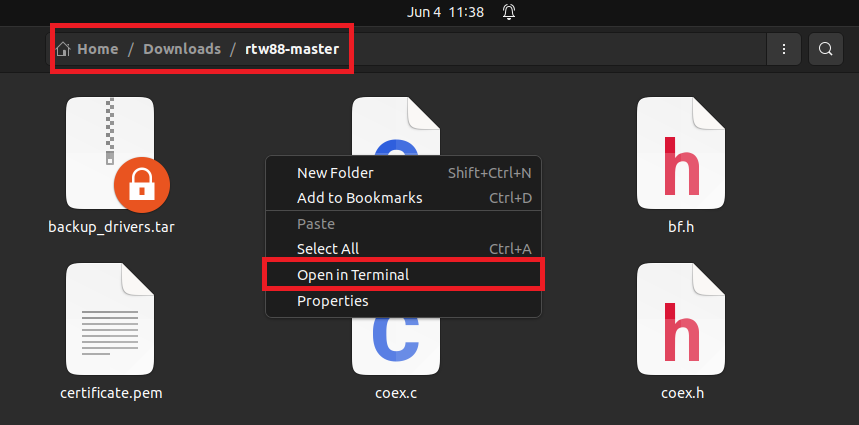
Secure Boot can also prevent an externally built module from loading until it is signed. Check the module and Secure Boot state before treating a build error as a Wi-Fi configuration issue.
When you need more evidence
Keep the outputs from lspci -k, lshw, rfkill list, and the dmesg filter. Include your Ubuntu release, kernel version, and the adapter ID when you ask for help.
Use Linux network commands for IP and DNS checks after the adapter returns but a connection still cannot reach the internet. Inspect sockets with ss when a connected system still has an application-specific network issue.
Review Linux package management before changing repositories or reinstalling firmware packages. If Wi-Fi failed after a kernel change, understand Ubuntu kernel update control before you hold or remove a kernel.
Check Secure Boot carefully when a module was built outside Ubuntu’s packages. Ubuntu driver installation guidance also explains the package-first approach for supported hardware.
Verify the fix
- lshw shows a Wireless interface.
- rfkill list shows neither a soft nor hard Wi-Fi block.
- Ubuntu Settings shows the Wi-Fi panel and can scan for networks.
- The adapter still works after a reboot.
If the adapter remains absent from the hardware lists after these checks, stop changing driver packages and investigate the firmware setup or hardware connection. That boundary saves time and gives support staff the evidence they need.