
I checked the current releases on kde.org and xfce.org before updating this guide, so every version call below matches Plasma 6.7 and Xfce 4.20.
Xfce vs KDE Plasma comes up any time a Linux beginner asks how to pick a desktop environment for an older laptop or a fresh install. KDE Plasma packs a customizable, Windows-like interface with polished apps like Dolphin and Krunner, while Xfce sticks to a minimal, modular design built to run on modest hardware.
Neither is objectively better. What follows compares memory use, customization, stability, Wayland support and native apps so you can match the desktop to your actual system and workflow.
KDE and XFCE are popular Linux (and other UNIX-like) desktop environments. KDE Plasma offers a beautiful yet highly customizable interface, whereas XFCE provides a clean, minimalistic, and lightweight desktop for your OS. KDE might be a better option for the users moving to Linux from Windows, and XFCE might be a better option for systems low on resources.
K Desktop Environment (KDE) is developed by the KDE team using Qt 6 and KDE Frameworks, whereas XFCE was initially started by Olivier Fourdan and built using the GTK toolkit, the same toolkit used by the GNOME desktop environment but XFCE is not a fork of GNOME.
Xfce vs KDE Plasma: Head-to-head comparison
This section compares Xfce and KDE Plasma on the things that actually change your day-to-day experience: which distros ship them, how much RAM they use, how stable they are and how far you can push the customization.
Linux distributions with KDE or Xfce as the default desktop environment
KDE Plasma is the default desktop environment out of the box in distributions such as:
- Kubuntu, the KDE edition of Ubuntu
- KDE Neon
- Manjaro KDE
- Fedora KDE
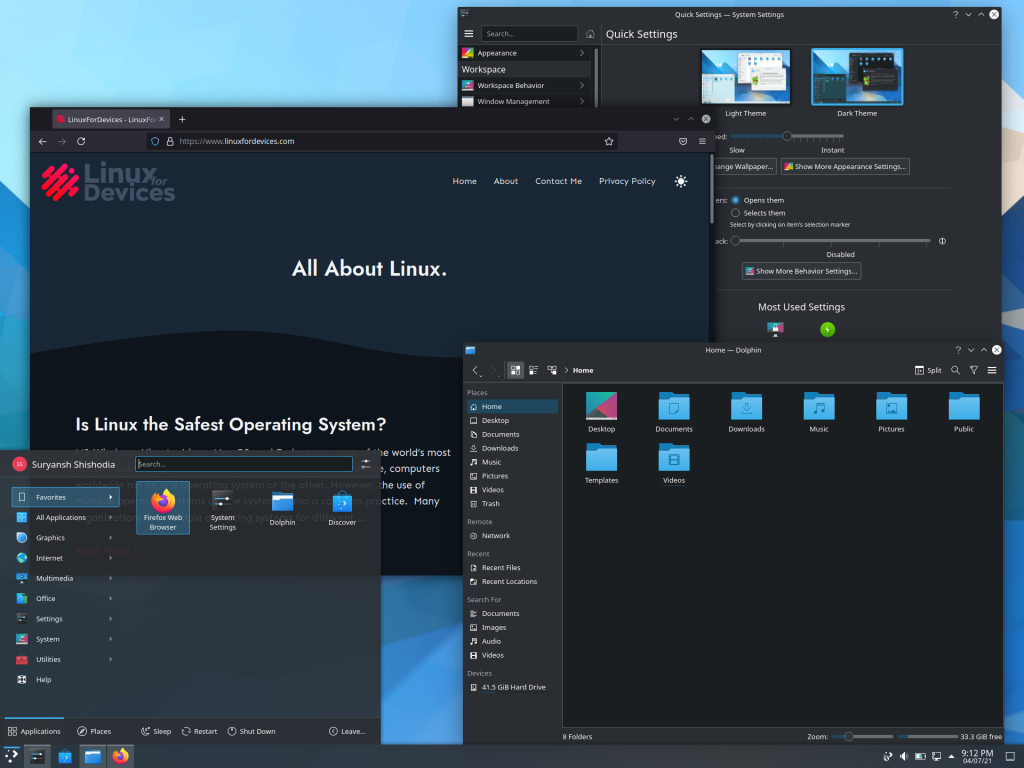
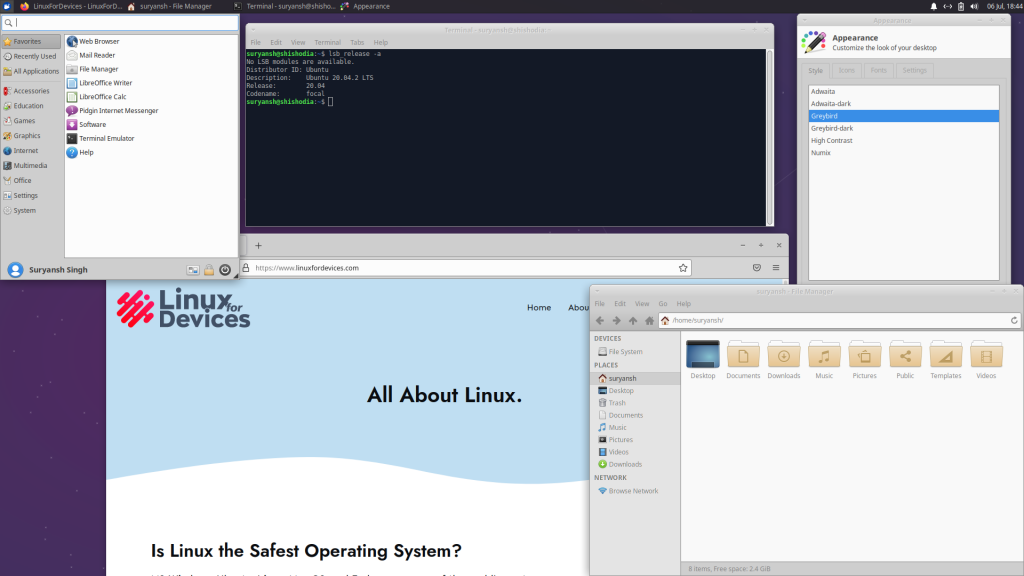
XFCE is too shipped as the default desktop environment for many operating systems such as Xubuntu, LinuxMint XFCE, Manjaro XFCE, MX Linux, and many more.
You can also install and use KDE or XFCE alongside any other desktop environment on your Linux distribution. Both, XFCE and KDE are widely available in official repositories of all popular Linux distributions and can be installed easily with the help of the distribution’s default package manager.
Idle memory usage: Xfce vs KDE Plasma
Xfce still uses less memory than KDE Plasma at idle, though the difference has narrowed since KDE Plasma 5. Our original 2021 test on Xubuntu and KDE Neon measured:
- KDE Plasma: 580 MB idling with just a terminal open
- Xfce: 476 MB idling with just a terminal open
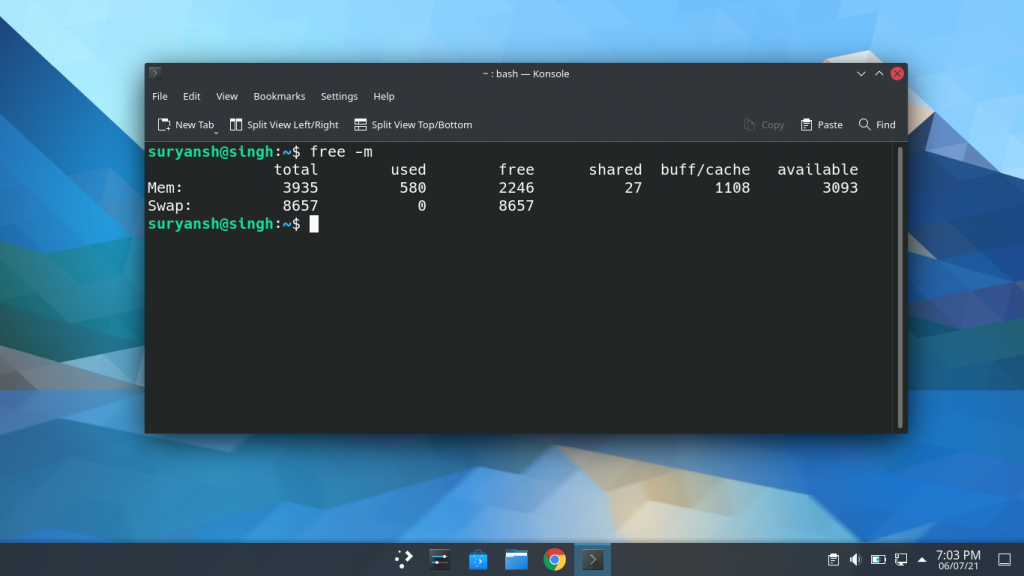
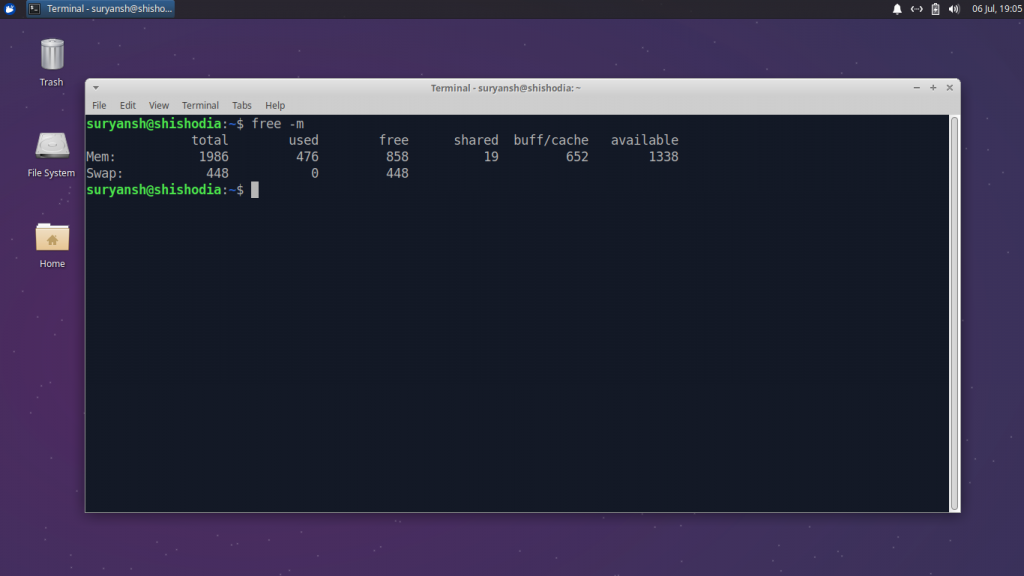
On current releases, KDE Plasma 6 typically idles around 400 to 700 MB depending on the distro and effects enabled, while Xfce 4.20 stays lower at roughly 300 to 500 MB.
Opening a browser closes most of that difference, since the browser itself uses more memory than either desktop shell. Check your own numbers with the free and htop commands.
Stability and development activity: Xfce vs KDE Plasma
Both desktops are stable once set up, though they get there differently:
- Xfce has existed since 1996 and ships major versions years apart, with 4.20 landing in December 2024, so a setup stays visually the same for a long time
- KDE Plasma ships feature releases about three times a year with monthly bugfixes, so you see new behavior more often than on Xfce
- KDE’s larger community includes corporate patrons like Canonical, Google and openSUSE
Customization: How far can you go
Xfce and KDE Plasma sit at opposite ends of the customization spectrum, and this is usually the biggest factor in which one a beginner ends up preferring.
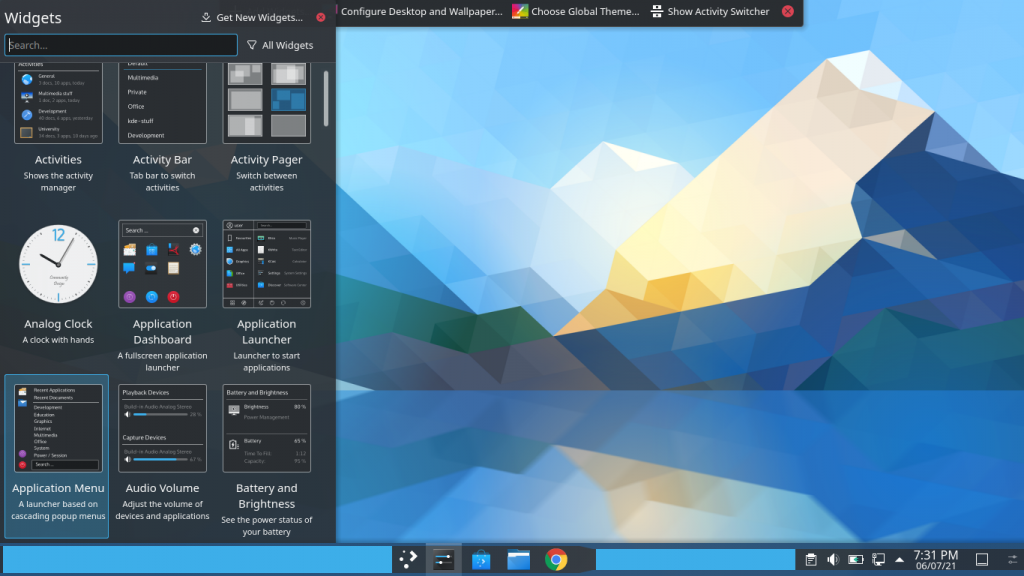
KDE Plasma offers a lot more customization than Xfce. There are plenty of beautiful themes to pick from, along with widgets and polished apps like Krunner and the Dolphin file manager.
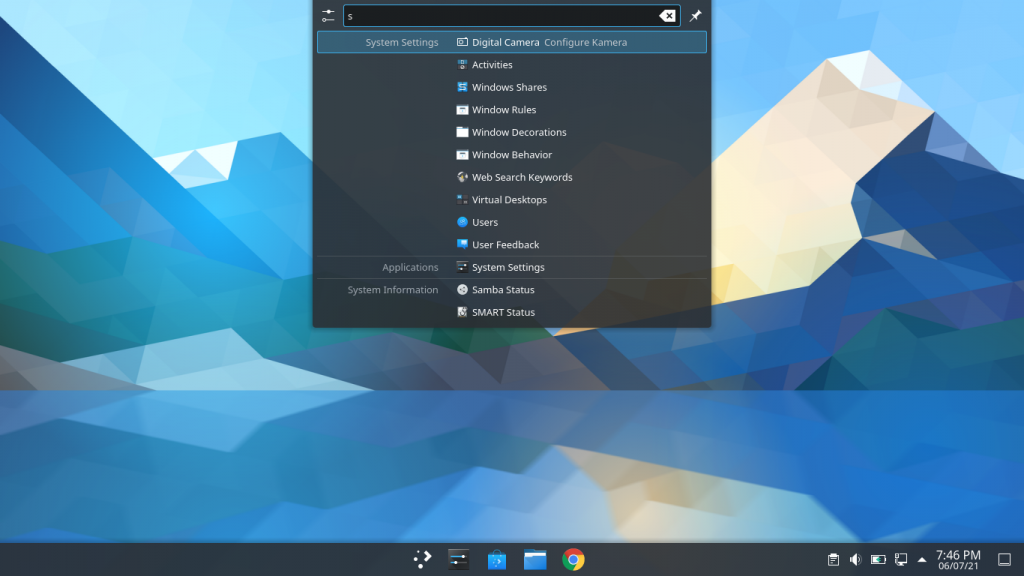
Krunner is a built-in launcher in the KDE app collection (a quick way to search and run things without touching the mouse) capable of currency conversions, calculations, opening files and folders and more.
If you are moving from Xfce, our guide to the best widgets for KDE Plasma is a good next stop.
Xfce is a minimalistic desktop that follows the Unix philosophy of modularity and reusability. It aims to be fast and low on resources, with fewer customization options than KDE Plasma but plenty of features.
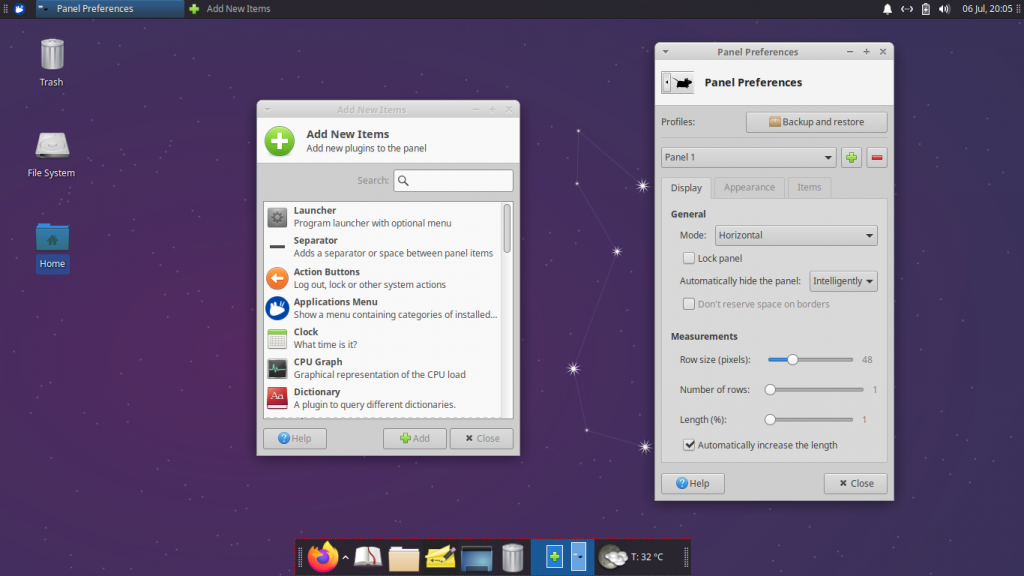
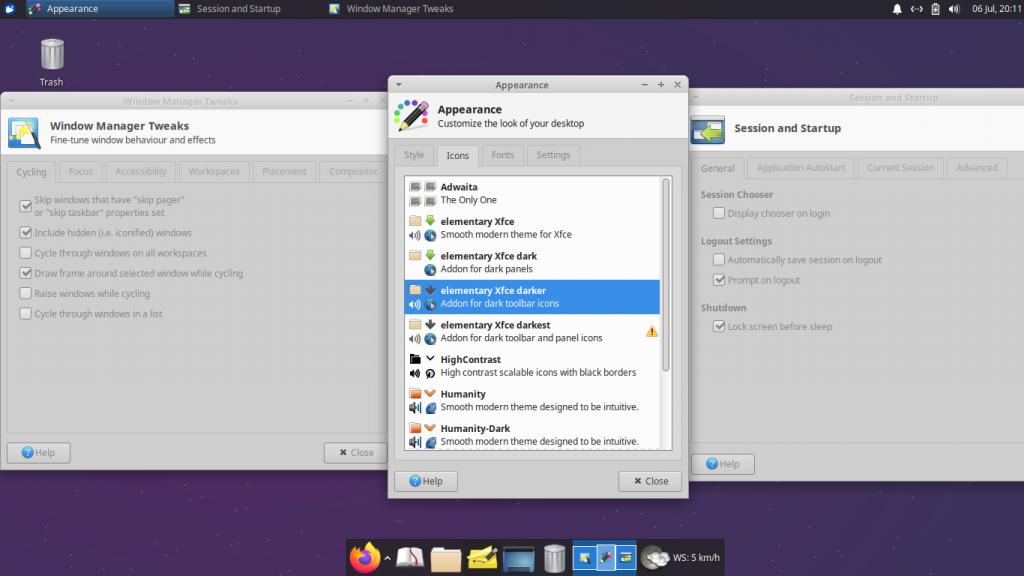
Some of the customization options provided by XFCE Desktop Environment
If you run both on the same distro, expect a little GTK theming friction:
- GTK apps can keep their default Adwaita look inside KDE Plasma
- Setting a matching GTK theme in System Settings early avoids redoing your other customization later
Wayland support: Xfce vs KDE Plasma
Our original 2021 comparison noted that Xfce had no Wayland support at all, unlike KDE. That is now out of date:
- KDE Plasma has supported Wayland since Plasma 5 and made it the default session in Plasma 6, running on the GPU-accelerated KWin compositor
- Xfce added experimental Wayland support in Xfce 4.20 (December 2024), but Xfwm4, Xfce’s own window manager, has not been ported yet
- Running Xfce on Wayland today means pairing it with a third-party compositor like Labwc or Wayfire, and the Xfce team still calls this setup advanced-user territory
For most beginners, KDE Plasma is the safer pick for a modern Wayland session out of the box, while Xfce on X11 stays the more mature path if Wayland is not a requirement. Your display manager matters too: KDE distros typically default to SDDM, while Xfce distros often use LightDM.
Native apps in Xfce and KDE Plasma
KDE ships a large family of “K apps,” all searchable and installable through the Discover software center:
- Dolphin, the file manager
- Konsole, the terminal
- Kdenlive, the video editor
Xfce takes the opposite approach. Its own apps are deliberately lightweight:
- Thunar, the file manager
- Mousepad, the text editor
Xfce has no built-in software center, so most Xfce distros lean on whatever store their base distro ships with.
If you like a matched set of tools that look and behave the same everywhere, KDE’s native apps are the bigger draw. If you would rather bring your own apps, Xfce’s minimal defaults leave less to undo.
Which is better for older hardware or a VPS
Xfce is generally the safer starting point on constrained systems:
- Systems with 4 GB of RAM or less
- A low-spec VPS running a graphical session over remote desktop
- Any setup where you want maximum headroom for your actual applications
KDE Plasma is still workable on modest hardware if you disable visual effects and animations in System Settings, since most of its default resource use comes from the compositor rather than the shell itself. On genuinely old or single-core machines, though, even a trimmed KDE session tends to feel heavier than Xfce.
If neither feels light enough, an even leaner option like MATE is worth trying before giving up on a graphical desktop.
Xfce vs KDE Plasma comparison table
| Feature | KDE Plasma | Xfce |
|---|---|---|
| Toolkit | Qt 6 | GTK |
| Idle RAM usage | Roughly 400 to 700 MB | Roughly 300 to 500 MB |
| Wayland support | Default since Plasma 6 | Experimental since Xfce 4.20 (needs Labwc or Wayfire) |
| Customization | Wide-ranging, built-in | Moderate, mostly manual |
| Default file manager | Dolphin | Thunar |
| Software center | Discover | None built in |
| Release cadence | About three feature releases a year | Major versions years apart |
| Best suited for | Customization fans and Windows switchers | Older hardware and minimalists |
Use this table as a quick reference. The sections above cover why each row differs.
Which one should you choose
KDE Plasma and Xfce are both great desktop environments. For a more minimalist and lightweight desktop, Xfce might be a better option, but for a beautiful and highly customizable desktop environment, KDE Plasma is usually the better choice.
There is no single best desktop environment for everyone, since everyone has different hardware and a different idea of how their desktop should look and feel.
If you want to try both, Linux Mint offers pre-built ISO files for either desktop, and both are extremely user-friendly. It comes down to your system requirements and what kind of desktop experience you are after.
Key takeaways
- Xfce still uses less RAM at idle than KDE Plasma, but the 2026 difference is much smaller than in 2021.
- KDE Plasma defaults to Wayland since Plasma 6. Xfce’s Wayland support is still experimental as of 4.20.
- KDE Plasma wins on customization and ships a bigger family of native “K apps.”
- Xfce is the safer pick for 4 GB of RAM or less, or a VPS running remote desktop.
- Both desktops live in nearly every major distro’s repos and install side by side.
- Disabling KDE’s visual effects closes most of the resource difference on modest hardware.
Frequently asked questions
Is KDE Plasma heavier than Xfce in 2026?
Yes, but only slightly. KDE Plasma 6 idles around 400 to 700 MB compared to Xfce’s 300 to 500 MB, a much smaller difference than a few years ago.
Can I install both KDE Plasma and Xfce on the same distro?
Yes. Most distros let you install both from official repositories, though you should expect occasional GTK theme mismatches between sessions.
Does Xfce support Wayland yet?
Xfce 4.20 added experimental Wayland support, but Xfwm4 is not ported yet, so you need a third-party compositor like Labwc or Wayfire.
Which desktop is better for an old laptop?
Xfce is usually the better choice for hardware with 4 GB of RAM or less, thanks to its lower idle memory use and simpler compositor.
Is KDE Plasma good for beginners coming from Windows?
Yes. Its default layout, with a start menu and taskbar, feels familiar to anyone coming from Windows, and Discover makes finding apps easy.
Which desktop environment is more stable?
Both are stable in daily use. Xfce changes less often, while KDE Plasma ships feature releases about three times a year with monthly bugfixes.
The answers above cover the questions readers ask most. Here is the short version to act on.
Conclusion
Whichever you pick, you are never locked in. Both desktops install in minutes on top of an existing Linux system, so trying one and switching later costs you nothing but time.