

Chrome Picture-in-Picture on Linux puts a playing video in a small floating window that stays above your browser tabs and desktop applications. Start with Chrome’s Media control button because it needs no extension, then use the site menu or Google’s extension only when the first method is unavailable.
Choose the Right Picture-in-Picture Method
Picture-in-Picture (PiP) support depends on both Chrome and the website’s video player, with each method reaching the same floating window through a different control.
| Method | Use it when | What you need |
|---|---|---|
| Chrome Media control | You want the shortest built-in path | A playing video that Chrome detects |
| Video context menu | The website exposes a PiP command | A supported HTML video player |
| Google PiP extension | The built-in controls do not appear | The official extension and its Alt+P shortcut |
| Automatic PiP | You want an eligible video to float when you change tabs | A supported site and explicit permission |
Update Chrome before troubleshooting the feature through the same package manager that installed it, as explained in this Linux package management overview.
Open Picture-in-Picture from Chrome’s Media Controls
Play the video first so Chrome can register an active media session. Google’s Chrome media control instructions place Enter picture-in-picture beside the active video in the toolbar menu.
- Open a video in Chrome and start playback.
- Select Media control in the Chrome toolbar.
- Find the active video and select Enter picture-in-picture.
- Drag the floating window to a clear part of the desktop and resize it from a corner.
The menu identifies the active tab and exposes a small Enter picture-in-picture control beside its playback buttons, which you should select instead of the close button on the media card.
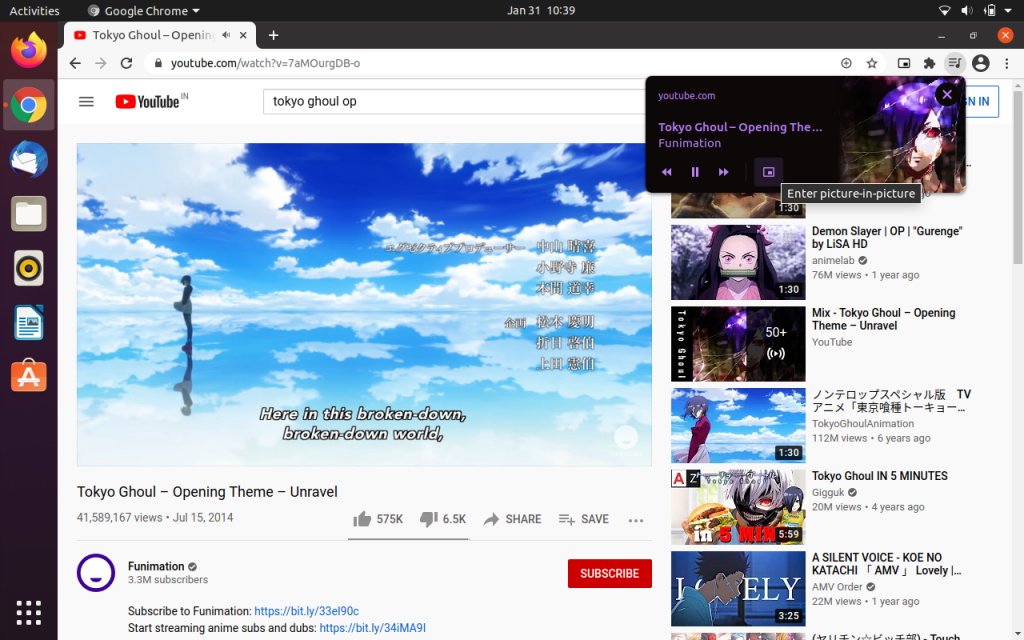
The source tab shows that its video is playing in Picture-in-Picture while the detached window remains visible above other applications. This is the state you should confirm before switching tasks.
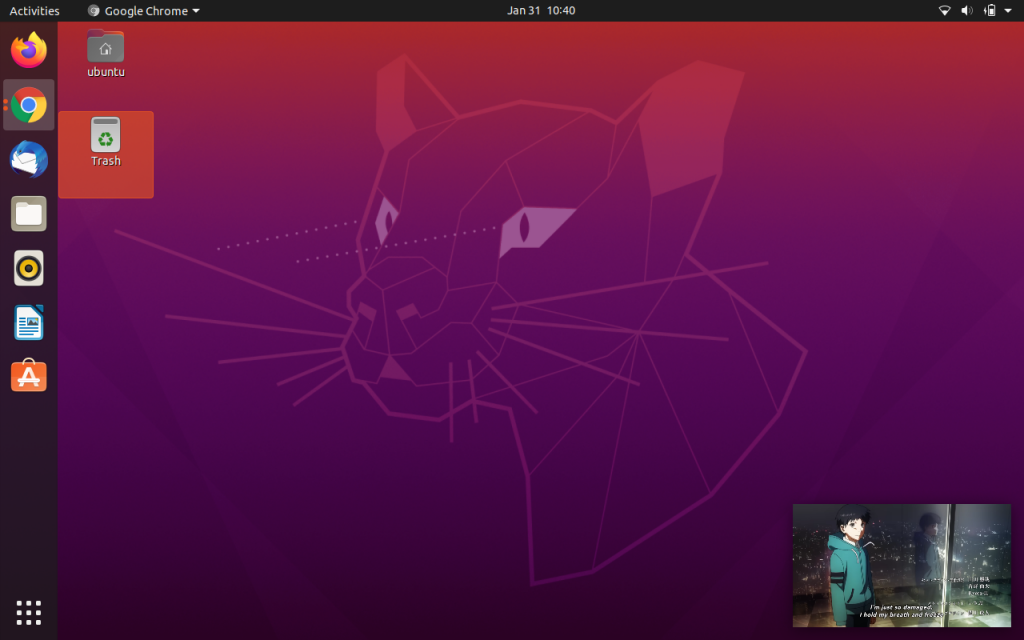
The PiP window can move and resize, but the website controls which playback actions appear inside it. Chrome may replace the current PiP video when you start Picture-in-Picture for another video.
Use the Video Menu When Media Controls Do Not Show PiP
Some players expose Picture in Picture in their context menu. Right-click the playing video and select Picture in Picture when the command appears.
YouTube first opens its own menu, so a second right-click on the video may be needed to reach Chrome’s menu. This path can fail when a site uses a custom player, disables PiP, or serves protected media.
Current Chrome provides PiP through stable media controls, site menus, and permissions, so this workflow does not require experimental flags.
Install Google’s Picture-in-Picture Extension as a Fallback
Install Google’s official Picture-in-Picture extension from the Chrome Web Store only when the built-in entry points do not work on a video you need.
- Open the official extension listing and select Add to Chrome.
- Review the confirmation prompt and select Add extension.
- Play a video, then press Alt+P to enter or leave Picture-in-Picture.
The shortcut avoids depending on a website’s menu design. If you keep several browsers installed, compare how their packages receive updates before changing your default, including the tradeoff covered in this Firefox Snap and DEB walkthrough.
Control Automatic Picture-in-Picture Permissions
An eligible website can ask Chrome to enter Picture-in-Picture automatically when you move to another tab, but Chrome presents Allow this time, Allow on every visit, and Don’t allow instead of assuming permanent permission.
Change an earlier choice from the icon beside the address bar, then open Site settings and adjust Automatic picture-in-picture. Use per-site permission instead of granting every video site the same behavior.
Move, Resize, and Close the PiP Window
Drag the window from its video area and resize it from an edge or corner. A tiling desktop can apply different placement rules, so check your compositor or use a focused setup such as this GNOME tiling window manager guide when the window does not stay where you place it.
Move the pointer over the PiP window to reveal its controls, then select Back to tab to return the video to Chrome or the close button to dismiss the floating window.
Pausing the video and closing its source tab ends the media session without granting the site permission to reopen the floating window automatically.
Fix Missing, Black, or Choppy Picture-in-Picture Video
Test another public video before changing Chrome settings because a successful second test points to the first website’s player, digital rights management, or account policy.
- No Media control icon. Start playback, confirm that the tab is not muted by the site, and reload the page.
- No Picture in Picture menu item. Try Chrome’s Media control path, then the official extension.
- Black PiP window. Update Chrome and the graphics stack, then test with hardware acceleration both enabled and disabled.
- Choppy playback. Reduce the video resolution and check the graphics driver. Intel systems can use this Ubuntu Intel graphics driver procedure.
- Site blocks PiP. Respect the player’s restriction. For supported downloadable media, an offline workflow such as Parabolic for yt-dlp may fit the task better.
Reset only the setting tied to the symptom. Clearing every site permission or browser profile can remove useful configuration without proving whether the player supports PiP.
Frequently Asked Questions
These answers separate Chrome’s built-in behavior from site support and extension fallback.
Does Chrome Picture-in-Picture work on every Linux distribution?
Chrome provides the same PiP controls across supported Linux desktop builds, but your desktop environment and the website’s player can affect window behavior and available controls.
Do I need the Google Picture-in-Picture extension?
No. Use Chrome’s Media control button or the video context menu first. The official extension is a fallback when those entry points are missing.
Why is Picture-in-Picture unavailable on one website?
The site may use a custom player, protected media, or a policy that does not expose PiP. Test another video to separate a site restriction from a browser or graphics problem.
Keep the Built-In Path as Your Default
Use Media control for routine Picture-in-Picture, keep automatic access limited to sites you trust, and install the official extension only for a confirmed compatibility need. If a single site still fails after a second-video check, treat it as a player boundary rather than changing unrelated Linux settings.