
You can reset a forgotten Kali Linux password when you have console access to the machine or virtual machine and can edit its GRUB boot entry. The recovery path starts a root shell, remounts the installed filesystem read-write, and uses passwd to set a new password for the account you own.
Check the recovery boundary first
This method changes an account password. It does not reveal the old password, bypass a full-disk encryption secret, or help with a system you do not administer.
- Use the Kali console or the VirtualBox display, not a remote SSH session.
- Keep the VirtualBox window focused during boot so you can open the GRUB editor.
- If the disk is encrypted, enter its unlock secret before the installed root filesystem can be mounted.
Open the Kali GRUB editor
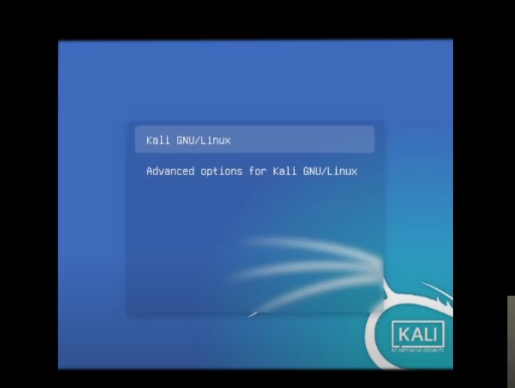
Restart Kali and open the GRUB menu. On a virtual machine, the timing depends on the firmware and boot screen, so use the keyboard in the VM window as the system starts.
The retained screenshot shows the Kali GNU/Linux entry selected in GRUB. Select that entry and press e to edit its boot instructions.
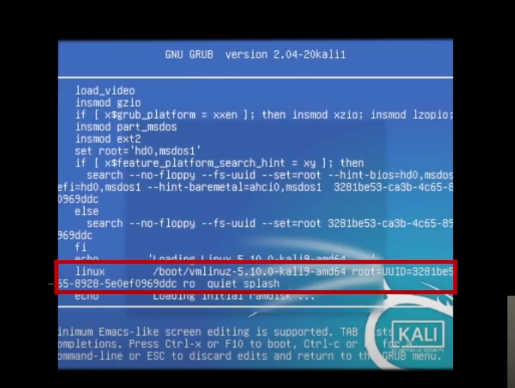
The next screenshot marks the linux boot instruction in red, rather than a command prompt where you should type a password.
Boot a temporary root shell
Move to the end of the line that begins with linux. Replace the existing quiet splash text on that line with rw init=/bin/bash, then boot the edited entry with Ctrl+X or F10.
rw init=/bin/bash
Kali now starts a root shell before its normal login service. The installed filesystem must be writable before passwd can update the account database.
Set a new password for the right account
List regular home directories if you do not know the username. The directory name usually identifies the account you need to recover.
ls /home
Remount the root filesystem, then replace USERNAME with the account name returned by ls /home. passwd prompts for the new password twice and does not display the characters you type.
mount -o remount,rw /
passwd USERNAME
sync
Start the normal init process after sync. If the system does not continue, reboot from the virtual machine controls and sign in with the new password.
exec /sbin/init
Confirm the account works after restart
Sign in with the new password, then use passwd without an account name only after you are logged in as the account whose password you want to change. Review the Kali Linux command reference if you need to update the system after recovery.
Avoid the common recovery mistakes
Kali documentation identifies default credentials as tool-specific values, while the installer creates the regular account password during setup. Do not enter a default credential from an old tutorial.
- Do not use passwd before remounting the root filesystem read-write.
- Do not reset root when the missing password belongs to a regular account.
- Do not close the VirtualBox window before the changed boot entry starts.
- Do not treat a full-disk encryption secret as an account password.
Protect the virtual machine after recovery
Take a VirtualBox virtual-machine backup after you regain access. A backup gives you a recovery point for configuration changes, but it should be stored with the same care as the VM because it can contain sensitive files.
If you are rebuilding the VM instead, the VirtualBox Kali installation walkthrough covers a clean Kali setup. Use Linux users, groups, and permissions to check which account should have administrative access, and Linux command line basics if you need a quick refresher before working in the recovery shell.
Frequently asked questions
These answers cover the account and storage boundaries that determine whether a GRUB recovery shell can help.
Can you reset a forgotten Kali Linux password from GRUB?
Yes. If you can edit the GRUB boot entry and boot a root shell, you can remount the root filesystem read-write and run passwd for the account you need to recover.
What username should you use with passwd?
Run ls /home from the root shell to see regular home directories, then use that directory name with passwd. Do not assume that kali is the account name.
Why does passwd fail in the recovery shell?
The root filesystem may be mounted read-only. Run mount -o remount,rw / before passwd, then use sync before starting the system again.
Does this recover the old password?
No. Linux stores a password hash, not the original password. This procedure sets a new password for an account you control.
What if the Kali installation uses full-disk encryption?
You still need the disk-unlock secret before Linux can reach the root filesystem. A GRUB recovery shell does not replace that secret.
After you regain access, record where your recovery information is stored and keep your VM backup current. That gives you a way back without turning a password reset into your regular recovery plan.