

Spooftooph is a Kali Linux Bluetooth tool for changing the name, class, and address exposed by an adapter during an authorized lab assessment. Kali currently lists version 0.5.2 and the package command, but the tool can alter a radio identity, so use it only on hardware and Bluetooth environments you own or are explicitly authorized to assess.
Keep the assessment boundary explicit from the first command.
What Spooftooph changes
Bluetooth discovery exposes several fields, including a device name, class, and Bluetooth device address. Spooftooph changes those fields on the adapter selected with -i, which makes it useful for verifying how a controlled lab responds to an expected identity change.
The tool does not grant access to another device. A changed address or name can also interrupt an existing pairing, so keep a recovery path for your own adapter before altering its identity.
Record the original identity before you test.
Install Spooftooph on Kali Linux
Kali’s current tool page lists Spooftooph in its package catalog. Refresh package metadata, then install the package with apt.
sudo apt update
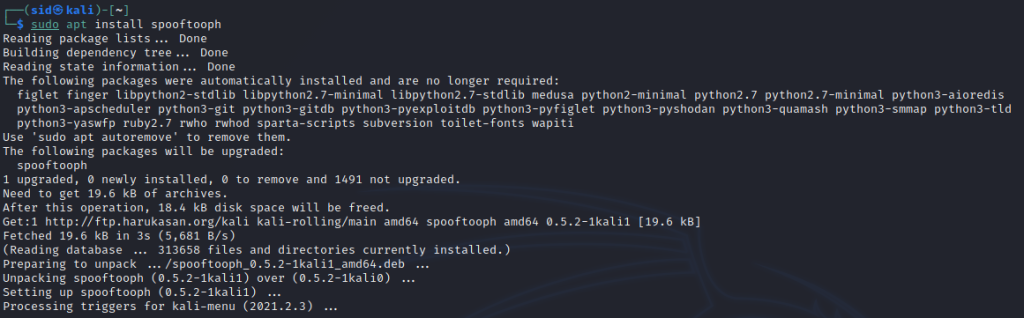
sudo apt install spooftooph
The preserved terminal capture shows the package installation on Kali. The package version shown there, 0.5.2, matches the version on Kali’s current tool page.
If you are setting up an isolated lab first, use the site’s Kali Linux VirtualBox setup. A virtual machine can help with package exploration, but a guest cannot use a Bluetooth adapter unless you pass through compatible hardware.
Use a dedicated adapter for radio tests.
Confirm the command and your adapter
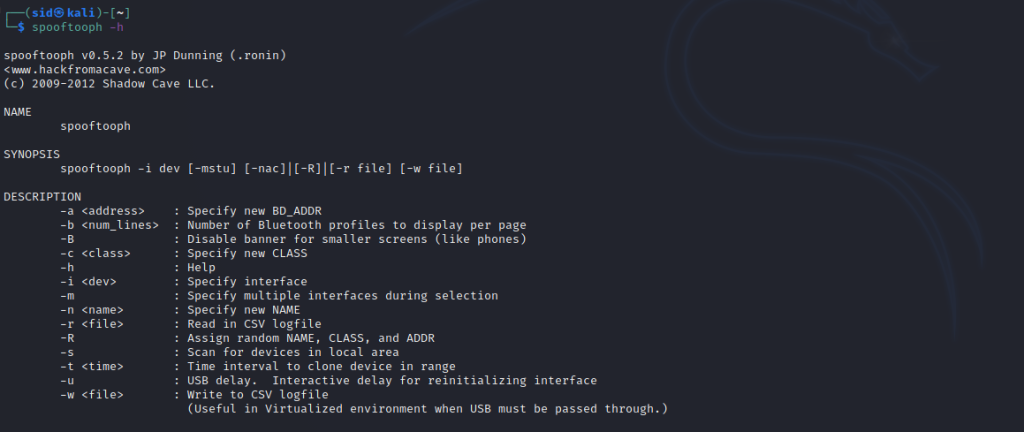
Start with the help output before changing an adapter. It lists the interface selector, name, address, class, random-profile, scan, read, write, and interval options available in the installed build.
spooftooph -h
The help screen below identifies -i as the Bluetooth interface argument. Use the adapter name shown by your own system, such as hci0, rather than copying an interface name from another machine.
Use your Kali Linux command-line reference if you need to inspect interfaces and privileges before you begin. The Linux users, groups, and permissions guide explains why administrative commands need care.
Do not assume hci0 exists on every system.
Change an adapter identity in an authorized lab
Kali’s current example uses an interface and an address. Substitute values assigned to your lab adapter, then observe the adapter from a separate receiver you control.
sudo spooftooph -i hci0 -a 00:11:22:33:44:55
This command is an identity-change test, not a connection command. Do not use an address copied from a nearby device or test an environment without written authorization.
Document the approved adapter before the test begins.
The saved output below shows a random-profile operation returning a manufacturer and device address. It is useful for recognizing the tool’s response format, but your own result depends on the adapter and its driver.
Keep the result inside the approved test scope.

Scan only the Bluetooth environment you are allowed to assess
Spooftooph can enumerate nearby Bluetooth devices and optionally write the discovered details to a file. Limit this step to your lab because radio discovery can expose devices that have not authorized your assessment.
sudo spooftooph -i hci0 -s -w lab-devices.csv
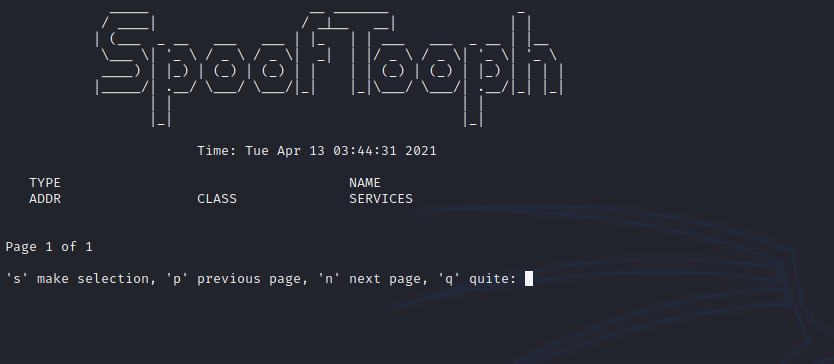
The command capture shows the scan invocation. The following screen is an example of the selection view when no eligible devices are returned.
An empty selection view is still a useful lab result.

A file created with -w is assessment data. Store it only for the authorized test, protect it like other reconnaissance output, and delete it when the engagement rules require removal.
Do not reuse a lab log in a different environment.
Reuse lab data only in the same authorized assessment
The -r option reads a saved log and applies a selected lab profile. Use it only with data you created in the same controlled environment, because replaying someone else’s Bluetooth identity crosses the scope of a normal lab check.
sudo spooftooph -i hci0 -r lab-devices.csv
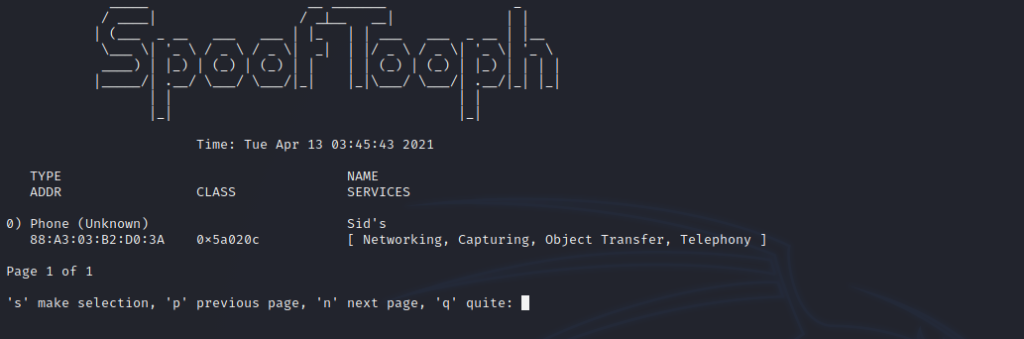
The preserved output shows the tool entering its cloning operation and reporting the selected manufacturer and address. Treat it as a lab-only reference for the command result, not evidence that a profile will work against another device.

Before saving or reusing data, review how package management works on Linux for updates and removal, then keep your shell work organized with the Linux command-line guide. Those steps make it easier to document which package and lab files you used.
Keep the command history with the assessment record.
Verify the result from a second controlled receiver
The useful check happens outside the adapter that ran Spooftooph. Use a second receiver you own to confirm the advertised name, class, and address, then restore the test adapter before reconnecting it to ordinary devices.
- Record the adapter identity before the lab test.
- Run one authorized change against your adapter.
- Observe the result from a separate receiver you control.
- Restore the adapter and remove lab logs when the check is complete.
A hosted test environment remains useful for learning the command surface, but it cannot replace a controlled radio test. Hardware support, drivers, and the device under observation determine whether the change is visible.
Is Spooftooph included with Kali Linux?
Kali currently lists Spooftooph in its tool catalog and documents installation with sudo apt install spooftooph.
Which Bluetooth interface should I use with Spooftooph?
Use the interface name assigned to your own Bluetooth adapter, such as hci0. Confirm the name on your system before running a command.
Can Spooftooph access another Bluetooth device?
No. Spooftooph changes information exposed by the adapter you select. It does not authorize access to another device.