
A fresh Ubuntu Server boot can leave you at a login prompt with no desktop to open. I’m curious how that shell-only machine becomes a familiar Ubuntu session without confusing an installed desktop with a visible one.
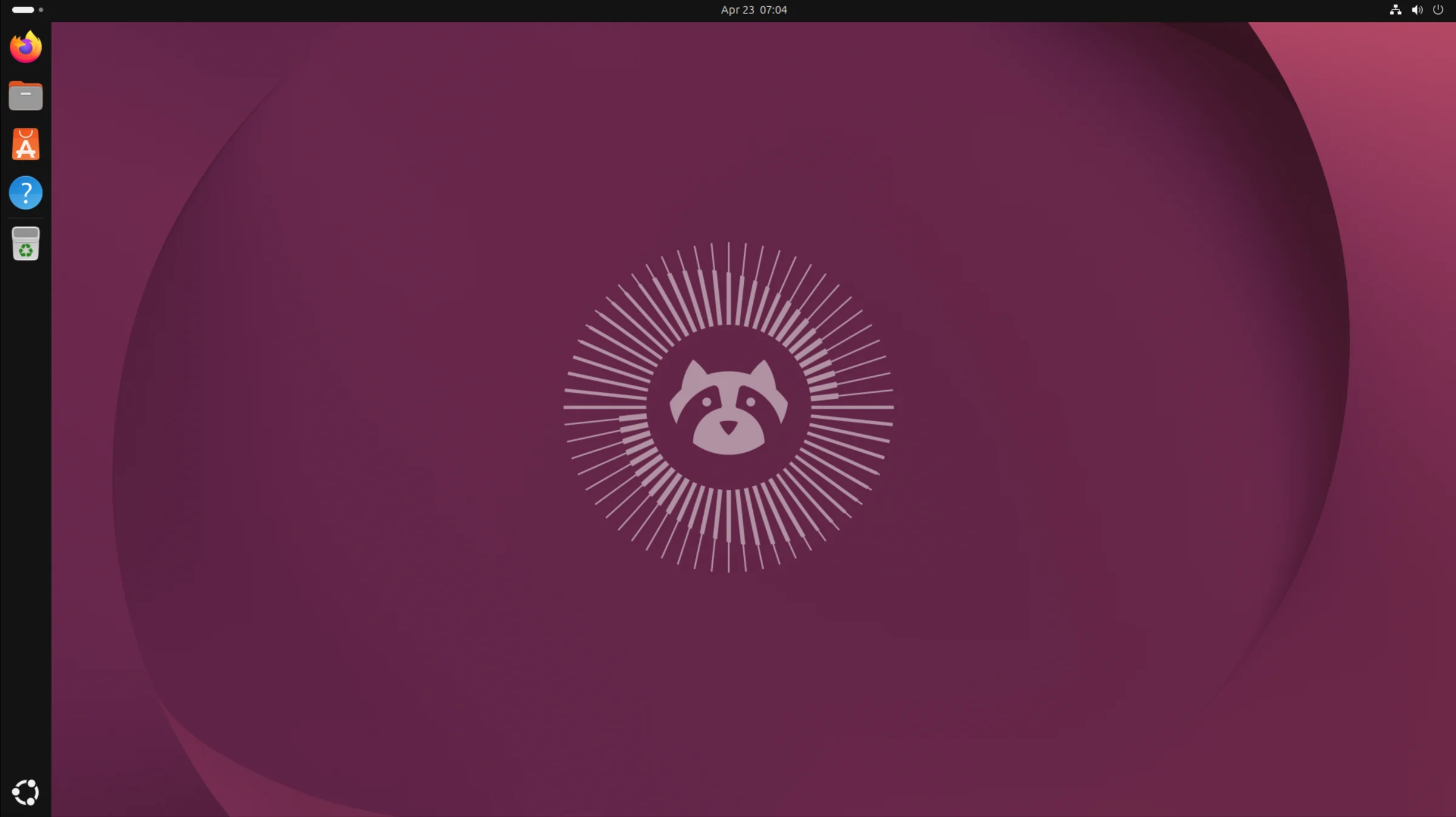
You’ll get a GNOME session you can reach through the machine’s display, not just a new prompt in the terminal. The starting distinction is that GNOME is already included with Ubuntu Desktop.
GNOME is already included with Ubuntu Desktop
Ubuntu Desktop uses GNOME, and Canonical’s current download page lists Ubuntu 26.04.1 LTS with GNOME 50.
A desktop environment provides the graphical session where you sign in, launch apps and change settings. Ubuntu’s desktop packages install that session as a coordinated set rather than one standalone GNOME command.
Ubuntu Server and minimal systems can start at a terminal without a graphical session. If this is already the standard Ubuntu Desktop, GNOME is installed and these package steps are unnecessary.
Check the release and where the screen will appear
Use the install steps on Ubuntu Server or a minimal Ubuntu system. APT gets packages from the repositories configured for that release, so check the machine before changing its desktop.
| Starting system | Next action |
|---|---|
| Standard Ubuntu Desktop | GNOME is already installed. Open the desktop session rather than installing it again. |
| Ubuntu Server or minimal Ubuntu at a terminal | Continue with the desktop package installation below. |
- Use an account with sudo access.
- Make sure the machine can reach its configured Ubuntu package repositories.
- Have a local monitor, virtual-machine console, or separate remote desktop path available. An SSH terminal does not display the GNOME desktop.
To identify the installed release, read its operating-system file:
cat /etc/os-release
The VERSION and UBUNTU_CODENAME fields identify the release whose package versions APT will resolve. Do not add repositories for a different Ubuntu release to install GNOME.
Install the Ubuntu GNOME desktop
A metapackage groups dependencies that APT installs as a set. I chose the full Ubuntu desktop package as the main route because its archive entry lists GDM and GNOME components among those dependencies.
Step 1: Refresh the package index
APT needs the current package lists from your configured repositories before it can select versions for this Ubuntu release.
sudo apt update
The update downloads package metadata from the configured repositories for this Ubuntu release. It does not upgrade installed software.
Step 2: Install the full desktop package
Install the Ubuntu desktop metapackage. APT shows how many packages it will add or upgrade, any removals, and the disk-space change before asking you to confirm.
sudo apt install ubuntu-desktop
Leave the -y flag out so the confirmation prompt stays visible. Press N if the package plan contains removals you did not expect.
If a display-manager selection screen appears, choose gdm3 for the GNOME login manager. Let APT finish and read any final error before rebooting.
Step 3: Reboot and sign in
After APT completes without errors, restart Ubuntu so the graphical login manager can start during boot.
sudo reboot
The desktop can still be installed and running when an SSH client has no way to show it. Sign in from the computer’s display or its virtual-machine console.
Choose the full or minimal desktop package
Ubuntu publishes a full desktop metapackage and a minimal desktop metapackage. Both provide a GNOME desktop path, but the included package set differs.
| Package | Choose it when | What it represents |
|---|---|---|
| ubuntu-desktop | You want the standard Ubuntu Desktop package set. | Full Ubuntu desktop metapackage with GNOME components and GDM dependencies. |
| ubuntu-desktop-minimal | You want Ubuntu’s minimal desktop package set. | Minimal Ubuntu desktop metapackage with a GNOME login path. |
The minimal package still installs a graphical session and display manager. To use that package set instead of the full one, install it in Step 2 rather than adding both by default:
sudo apt install ubuntu-desktop-minimal
If you are choosing a different desktop, compare Ubuntu with Lubuntu’s LXQt desktop or compare Ubuntu with Kubuntu’s KDE desktop before installing another package set.
Confirm the GNOME display manager
Run the status check after reboot. An active result confirms that the display manager is running, but it does not prove that a remote session is configured.
systemctl is-active display-manager
After sign-in at the local or virtual console, you can manage GNOME Shell extensions from the terminal to customize the session. An active result only confirms the login service is running.
If the login screen does not appear
The symptom points to either package setup or display access, and those need different checks. Do not change package settings yet.
| What you see | What to check next |
|---|---|
| The service check returns inactive | Confirm the APT install finished and that GDM was selected. Review the display-manager service status before reinstalling packages. |
| The display-manager unit is missing | Check whether APT completed the desktop installation and whether the package came from the repositories for this Ubuntu release. |
| The service is active, but the server still looks text-only | Open the machine’s physical or virtual display. SSH carries shell text, not the graphical login screen. |
| The machine is a cloud server without a console | Set up a supported remote desktop path separately. Follow the Ubuntu Server GUI steps for reaching it from a laptop. |
| You later decide to remove desktop packages | Review how APT removes Ubuntu packages and inspect the proposed removals before confirming. |
GNOME needs a display you can reach
A GNOME install and a visible desktop are different states. When the display manager is active but no login screen appears, check the local and remote sessions before changing the package installation.
loginctl list-sessions
A server reached only over SSH still needs a separate display path. Installing the desktop does not add remote access by itself.
GNOME installation questions
Does Ubuntu Desktop already include GNOME?
Yes. A standard Ubuntu Desktop installation includes the GNOME desktop. You do not need to install ubuntu-desktop again on that system.
Which package installs GNOME on Ubuntu Server?
Use ubuntu-desktop for the full Ubuntu desktop package set or ubuntu-desktop-minimal for the minimal set. APT resolves each package from the Ubuntu release configured on the server.
Does installing GNOME make it visible over SSH?
No. SSH provides a text shell. Use a local or virtual-machine console, or configure a separate remote desktop service for graphical access.