
Installing GIMP on Linux starts with checking which package route your distribution uses. GIMP, short for GNU Image Manipulation Program, is a free image editor for creating and changing raster images.
I’ll show you how to identify your distribution, then install GIMP with its package manager or Flatpak.
TL;DR: Install GIMP on Linux
Install GIMP with your distribution’s package manager, or use the Flatpak command published by GIMP when you want its upstream package.
- Ubuntu and related systems: use sudo apt install gimp.
- Fedora: use sudo dnf install gimp.
- Flatpak: use the current install command on GIMP’s downloads page, then launch with its app ID.
What Is GIMP on Linux?
GIMP, short for GNU Image Manipulation Program, is a free image editor for creating and changing raster images.
GIMP’s downloads page listed version 3.2.6 as stable on October 19, 2026. A distribution package may carry an earlier release than the upstream download, so check the version only when a specific feature matters to your work.
For a standard desktop, I would start with the distribution package because it uses the system’s usual update path. Choose Flatpak when you specifically want the upstream build.
How to Install GIMP on Linux Step by Step
The release information gives the human-readable name and ID for the next step.
Step 1: Open a terminal and identify your distribution
PRETTY_NAME gives the human-readable release name, while ID identifies the distribution.
cat /etc/os-release
The command prints the distribution ID and release details. The captured output is:
PRETTY_NAME="Ubuntu 24.04.5 LTS"
NAME="Ubuntu"
VERSION_ID="24.04"
VERSION="24.04.5 LTS (Noble Numbat)"
VERSION_CODENAME=noble
ID=ubuntu
ID_LIKE=debian
UBUNTU_CODENAME=noble
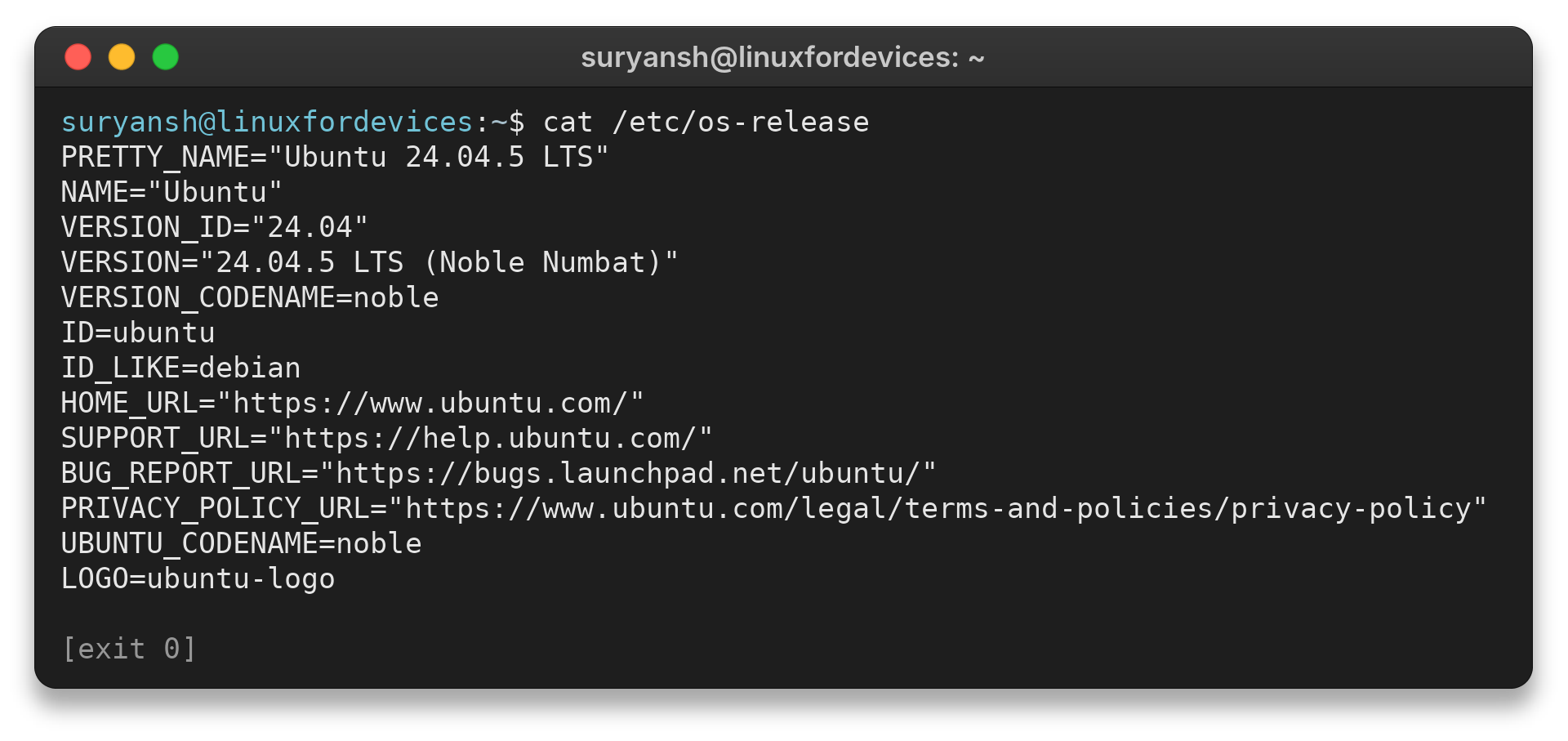
The output identifies Ubuntu, so the APT instructions below are the matching path. The screenshot shows the same command and result.
For a different distribution, consult its package documentation for the supported package name.
Step 2: Install GIMP with APT on Ubuntu
Refresh the package index so APT uses current repository metadata when it installs GIMP on Ubuntu.
sudo apt update
sudo apt install gimp
APT may ask for your account password because sudo runs the package operation with administrator privileges. Read the proposed package changes before confirming. If APT reports that the package cannot be found, check that the release’s standard repositories are enabled and that apt update completed without an error.
When the install finishes, search for GIMP in the applications overview. A missing menu entry may mean the index has not refreshed. Sign out and back in, or launch GIMP from a terminal.
Step 3: Install GIMP with DNF on Fedora
Run the install command and review the transaction summary before accepting package changes.
sudo dnf install gimp
Review DNF’s transaction summary before approving it. If DNF cannot find the package, check repository status and the exact error before adding a third-party source. Keep repository changes limited to a documented need.
When installation finishes, open the desktop app grid and search for GIMP. You can also try gimp from a terminal. If the command is not found, check whether the package is visible to your current user environment.
Step 4: Install the official Flatpak package
The GIMP downloads page lists a Flathub reference-file command for systems with Flatpak configured.
flatpak install --user https://flathub.org/repo/appstream/org.gimp.GIMP.flatpakref
The --user flag installs the app for the account running the command. Flatpak may ask to add a remote or runtime. Confirm the source is Flathub before proceeding.
If GIMP is missing from the desktop menu, start it using the upstream command:
flatpak run org.gimp.GIMP//stable
The identifier names the application and stable branch. GIMP lists the reference-file command on its downloads page. A runtime supplies shared components the app needs, so the first install may download more than GIMP itself.
Common GIMP Installation Issues and What to Do Next
When GIMP does not launch, check which package is installed and use its matching launch command before changing package sources.
| Route | Use it when | Keep in mind |
|---|---|---|
| APT package | Your system is Ubuntu or a compatible APT-based distribution | Version follows distro repositories |
| DNF package | Your system is Fedora | Version follows Fedora repositories |
| Flatpak | You want the route published by GIMP for Linux | Requires Flatpak and a separate runtime |
| Snap | You already use Snap and prefer that package system | GIMP provides a separate Snap install command |
For AppImage, check GIMP’s downloads page for the supported Debian releases, architecture requirements and installation instructions.
If the menu opens the wrong copy, inspect the installed package and Flatpak list before changing the launch command. Remove a duplicate only after checking which copy holds your preferences and plugins. GIMP settings may be stored separately for packages, so a clean-looking launch does not prove the other copy has the same brushes, extensions or configuration.
If GIMP cannot open a file, check whether the file chooser exposes its location, then consult Flatpak’s permission guide.
A version number needs context. A distribution can apply a security fix without adopting the newest upstream feature release, so compare the package’s release notes before treating its number as evidence that an update is missing.
For an APT or DNF install, check the installed package with the package manager’s query command when the app launches but its version is unclear. The exact query syntax varies by system. For a Flatpak copy, flatpak info org.gimp.GIMP displays information about the installed application, while flatpak list --app helps confirm that the app is registered in the current Flatpak installation.
For a shared desktop, a system-wide Flatpak install makes the app available to other users and requires administrator setup. Follow Flatpak’s instructions for that scope.
A missing menu icon does not by itself prove that installation failed. Check the command’s final status, then try the launch command for the selected package format. If the terminal prints an error, keep the exact text: a repository lookup failure points to a different issue than a missing desktop entry.
For the repository package, use the desktop entry or the package’s executable. For the Flatpak edition, use the application ID provided above. If neither starts, record the exact error and check the distro’s package logs or Flatpak’s application information before reinstalling.
Snap and AppImage have their own update and desktop integration behavior, so use them when those package systems already fit your setup.
When using a desktop software center, search for GIMP by its full name and check the publisher and package source shown on the details page. A listing can expose more than one format. Compare the displayed source with the route chosen above before pressing install.
Conclusion: Choose the Package Source for Your Linux Distribution
Use the package route that matches your system, then open GIMP and load an image to check that the editor starts.
For the package commands, see our guides to the apt command and sudo command. Check GIMP downloads for the latest release and alternative formats.
FAQ
These answers cover the common package and launch questions for Linux installs.
What command installs GIMP on Ubuntu?
Run sudo apt update and sudo apt install gimp. The version available depends on your Ubuntu release and configured repositories.
How do I install GIMP on Fedora?
Run sudo dnf install gimp in a terminal. Review the transaction before approving it. Fedora uses DNF for this package operation.
How do I launch GIMP Flatpak if it is not in the menu?
Run flatpak run org.gimp.GIMP//stable, the fallback command listed on GIMP’s downloads page.