Click here to learn
about this Sponsor:
Home  |  News  |  Articles  |  Forum

  Home arrow News arrow Ubuntu 11.04 out, awaits Unity verdict

Ubuntu 11.04 out, awaits Unity verdict
By Eric Brown

Rate This Article: Add This Article To:

Ubuntu 11.04 is available for free download, featuring a new touch-enabled Unity desktop environment, expected by Canonical to steer the popular Linux distro toward a tablet future while keeping the Ubuntu faithful happy. Other new features include LibreOffice 3.3.2, Firefox 4.0, and improvements to the Software Center.

Released in beta form a month ago, and officially announced by Ubuntu project sponsor Canonical last week, Ubuntu 11.04 ("Natty Narwhal") is now freely available. The release comes at a tumultuous time in the Ubuntu community, with some threatening to abandon Ubuntu over questionable open source practices, as well as radical changes in Natty Narwhal. More changes are coming in this fall's Oneiric Ocelot (Ubuntu 11.10), including a switch from X Window to the Wayland windowing interface.


Ubuntu 11.04 with new Unity interface

(Click to enlarge)

The most notable change in Natty Narwhal is a new multitouch Unity desktop that replaces GNOME and adopts an icon-driven, left-column program launcher, among other more fundamental changes. Canonical intends Unity to propel Ubuntu onto tablets and touch-enabled notebooks and netbooks. Yet for now, very few Ubuntu users have touch technology, so Unity will have to live or die by the mouse.

It will be interesting to see how many users stick with Unity or revert to the "classic," GNOME-based option. Some may want to try out Unity first with Canonical's new online trial-based version, which offers 55 cloud-based minutes with the new operating system.


Ubuntu Dash shortcuts

(Click to enlarge)

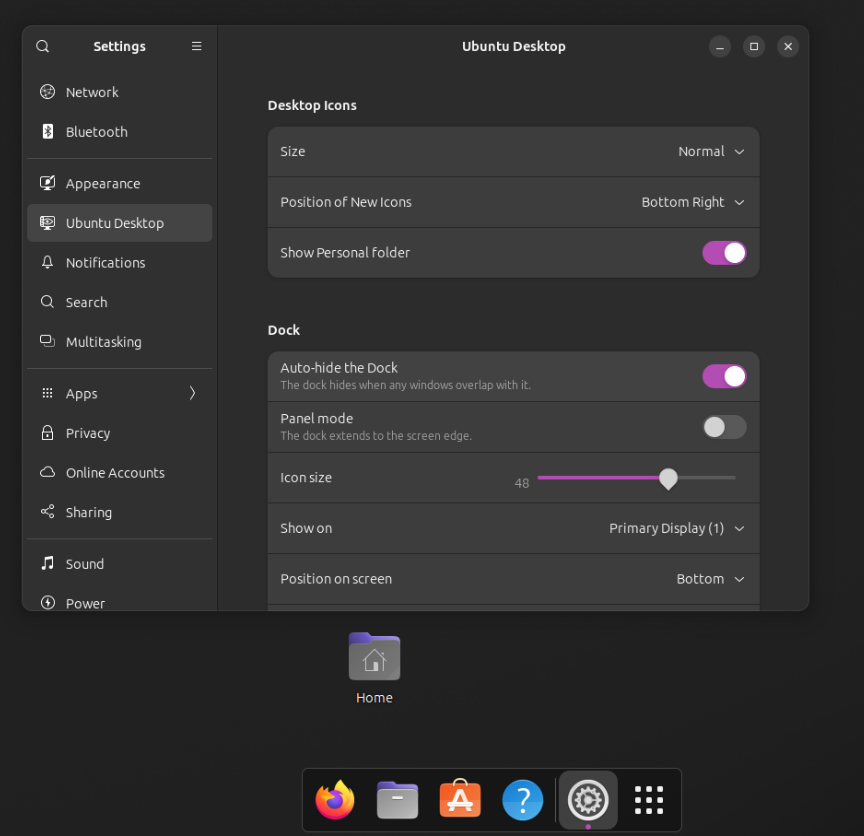
Unity includes a left-hand side launcher that can be hidden away to provide more screen space -- one of many features intended to make Ubuntu more usable on the smaller screens of netbooks and tablets. The other major new feature is the Dash screen, enabled from the upper left corner of the screen. This brings up a sizable display that provides access to shortcuts and search.


Ubuntu 11.04 Workspaces mode

(Click to enlarge)

Unity also debuts a new Workspaces mode for managing multiple windows and applications in a grid. The Workspaces feature is intended to enable easier switching between running applications. Other Unity features include drag-and-drop re-ordering of icons, full keyboard navigation support, keyboard shortcuts, and right-click context menu quick-lists, says the Ubuntu project.

LibreOffice and Software Center enhancements

Major Ubuntu 11.04 advances include the addition of LibreOffice 3.3.2 in place of OpenOffice.org, as well as updates to Firefox 4 and Banshee 2.0. Additional improvements are said to include ease-of-use enhancements to the Ubiquity installer, as well as an improved Network Manager.


Launcher (left) and Dash

(Click on either to enlarge)

The Ubuntu One cloud storage and music service offers a new control panel that adds selective syncing, and displays sync progress, says the Ubuntu project. File syncing is also said to be faster.

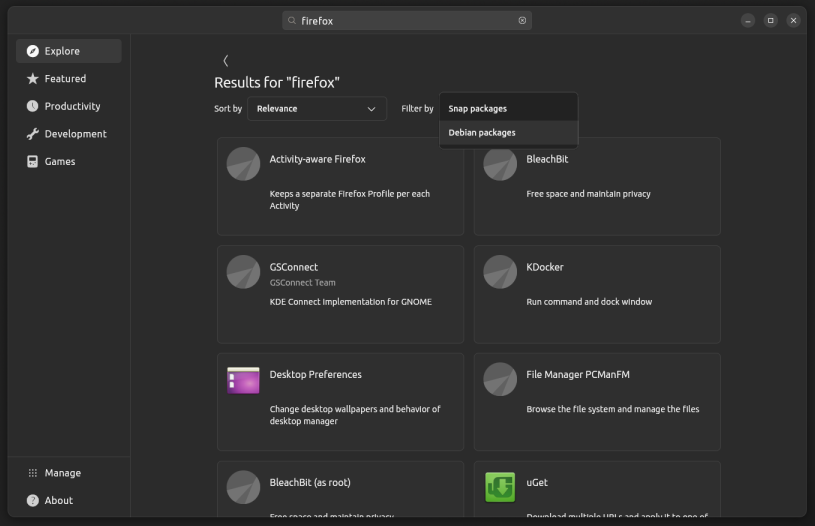
Enhancements have also been made to the Software Center with "rate and review" features. The Center now offers the ability to share reviews on social networking services via new integration features in the updated Gwibber app.

As noted in our earlier coverage, the Software Center also debuts a new test drive feature that lets users sample selected applications before installing them. However, as we looked into it, we found this is not available out of the box, but requires some additional steps to get it running. The feature works by running the applications on a remote server using the NX protocol and requires an extra package called "qtnx" to be installed manually.


Software Center (left) and Ubuntu One's music service

(Click on either to enlarge)

Under the hood, updated components include X.org 1.10.0, Mesa 7.10.1, GNU gcc 4.5, Python 2.7, and Upstart 0.9.7-1. One major change in Ubuntu 11.04 is the introduction of Qt libraries as an alternative development environment to the GNOME project's Gtk+. (For more details, please see our Ubuntu 11.04 beta coverage.)

Linux 2.6.38, Natty power issues, and a server update

Over the last week, Phoronix has been publishing benchmark results from the latest beta build of Ubuntu 11.04 showing a serious power regression issue, resulting in an average 10 percent increase in power consumption. The problems appear to be linked to the new Linux kernel 2.6.38 underlying Ubuntu, so other distros will likely soon be in the same fix. The Ubuntu project, however, is looking into the issue.

Linux 2.6.38 has many positive aspects, however, bringing Natty Narwhal users features such as AppArmor security, support for Intel IPS (Intelligent Power Sharing), and removal of the Big Kernel Lock. There have also been file-system improvements to Btrfs, Ext4, and XFS.

AppArmor and many other Linux 2.6.38 features will primarily impact Ubuntu Server 11.04. which is also available today, featuring an updated Ubuntu Enterprise Cloud (UEC) platform based on Eucalyptus 2.02, as well as a technology preview of the open source cloud platform, OpenStack "Cactus."

Other new server features include easier server provisioning and new power management features. More on the server edition is available in our previous coverage, and Ubuntu Server 11.04 will also likely be examined more closely in the coming weeks by our enterprise-focused friends at eWEEK.

ARM Unity-2d desktop, plus headless versions for PandaBoard, BeagleBoard

As with most Linux distros, Ubuntu is primarily an x86 phenomenon, yet it has begun to support ARM platforms as well. Although on x86 systems Ubuntu Netbook Edition (UNE) has disappeared in this release -- with its features being rolled into the mainstream desktop version -- preinstalled Ubuntu Netbook images for ARM are available. These include a Unity-2d version of the Unity desktop designed for 2D graphics hardware, based on Enlightenment Foundation Libraries.

Headless developer reference images are also provided for two Texas Instruments (TI) OMAP/ARM open developer platforms distributed by Digi-key. The images support the PandaBoard, based on a Cortex-A9 dual-core, 1GHz OMAP4430 processor, and the BeagleBoard, which incorporates 1GHz ARM Cortex-A8 OMAP processors, including TI's latest 1GHz DM730 CPU.

Big Ubuntu win in Germany

A Gartner operating system study released this week showed that Linux was the fastest growing server OS in 2010. However, as a desktop client OS, Linux wasn't even mentioned. Clearly Ubuntu and desktop Linux still have a long way to even reach Mac-like numbers let alone kick that puppy called Microsoft.

However, Ubuntu Desktop and desktop Linux in general, appear to be doing well in large deployments by governments, schools, and large organizations. This was demonstrated earlier this week in the successful migration of 10,000 desktops to Ubuntu by German Insurance company LVM Versicherung.

Availability

Ubuntu was announced on LWN.net, with links available pointing to release notes, overviews, and downloads. Or go straight to the source at Ubuntu's download page, which offers a link to the online trial version,  direct downloads, and USB/CD versions.


Related Stories:


Discuss Ubuntu 11.04 out, awaits Unity verdict
 
A correction, Unity 2D used on the Ubuntu ARM release is based on QT not...
I'm not enamored with Unity but I can live with it if I absolutely have to. But I am...
>>> Post your comment now!


>>> More News Articles          >>> More By Eric Brown


FUEL Database on MontaVista Linux
Whether building a mobile handset, a car navigation system, a package tracking device, or a home entertainment console, developers need capable software systems, including an operating system, development tools, and supporting libraries, to gain maximum benefit from their hardware platform and to meet aggressive time-to-market goals.

Breaking New Ground: The Evolution of Linux Clustering
With a platform comprising a complete Linux distribution, enhanced for clustering, and tailored for HPC, Penguin Computing¿s Scyld Software provides the building blocks for organizations from enterprises to workgroups to deploy, manage, and maintain Linux clusters, regardless of their size.

Data Monitoring with NightStar LX
Unlike ordinary debuggers, NightStar LX doesn¿t leave you stranded in the dark. It¿s more than just a debugger, it¿s a whole suite of integrated diagnostic tools designed for time-critical Linux applications to reduce test time, increase productivity and lower costs. You can debug, monitor, analyze and tune with minimal intrusion, so you see real execution behavior. And that¿s positively illuminating.

Virtualizing Service Provider Networks with Vyatta
This paper highlights Vyatta's unique ability to virtualize networking functions using Vyatta's secure routing software in service provider environments.

High Availability Messaging Solution Using AXIGEN, Heartbeat and DRBD
This white paper discusses a high-availability messaging solution relying on the AXIGEN Mail Server, Heartbeat and DRBD. Solution architecture and implementation, as well as benefits of using AXIGEN for this setup are all presented in detail.

Understanding the Financial Benefits of Open Source
Will open source pay off? Open source is becoming standard within enterprises, often because of cost savings. Find out how much of a financial impact it can have on your organization. Get this methodology and calculator now, compliments of JBoss.

Embedded Hardware and OS Technology Empower PC-Based Platforms
The modern embedded computer is the jack of all trades appearing in many forms.

Data Management for Real-Time Distributed Systems
This paper provides an overview of the network-centric computing model, data distribution services, and distributed data management. It then describes how the SkyBoard integration and synchronization service, coupled with an implementation of the OMG¿s Data Distribution Service (DDS) standard, can be used to create an efficient data distribution, storage, and retrieval system.

7 Advantages of D2D Backup
For decades, tape has been the backup medium of choice. But, now, disk-to-disk (D2D) backup is gaining in favor. Learn why you should make the move in this whitepaper.

Got a HOT tip?   please tell us!
Free weekly newsletter
Enter your email...
PLATINUM SPONSORS


ADVERTISEMENT


Check out the latest Linux powered...

Mobile phones!

MIDs, UMPCs
& tablets

Mobile devices

Other cool
gadgets

Resource Library

• Unix, Linux Uptime and Reliability Increase: Patch Management Woes Plague Windows Yankee Group survey finds IBM AIX Unix is highest in ...
• Scalable, Fault-Tolerant NAS for Oracle - The Next Generation For several years NAS has been evolving as a storage ...
• Managing Software Intellectual Property in an Open Source World This whitepaper draws on the experiences of the Black Duck ...
• Open Source Security Myths Dispelled Is it risky to trust mission-critical infrastructure to open source ...
• Bringing IT Operations Management to Open Source & Beyond Download this IDC analyst report to learn how open source ...


Most popular stories -- past 90 days:
· Linux boots in 2.97 seconds
· Tiniest Linux system, yet?
· Linux powers "cloud" gaming console
· Report: T-Mobile sells out first 1.5 million G1s
· Open set-top box ships
· E17 adapted to Linux devices, demo'd on Treo650
· Android debuts
· First ALP Linux smartphone?
· Cortex-A8 gaming handheld runs Linux
· Ubuntu announces ARM port


DesktopLinux headlines:
· Simulator runs Android apps on Ubuntu
· Hypervisor rev'd for higher reliability
· Pluggable NAS now supports Linux desktops
· Moblin v2 beta targets netbooks
· Linux-ready netbook touted as "Student rugged"
· USB display technology heading for Linux
· Ubuntu One takes baby step to the cloud
· Game over for Linux netbooks?
· Linux Foundation relaunches Linux web site
· Dell spins lower-cost netbook


Also visit our sister site:


Sign up for LinuxForDevices.com's...

news feed


Or, follow us on Twitter...