

Ubuntu’s status report can show the clock synchronized while the Time zone row still reads Etc/UTC. That split stands out to me: synchronization keeps the clock aligned, while the timezone sets regional display.
You’ll be able to identify the setting that makes Ubuntu report local time for the region you need. First, compare the local-time display with the system clock to see what the timezone setting controls.
What the system timezone controls
Ubuntu renders the current instant as local civil time by applying the system timezone, and timedatectl shows the active zone beside Coordinated Universal Time (UTC).
Network Time Protocol (NTP) synchronization keeps the system clock aligned with a time source, and Ubuntu’s time synchronization documentation notes that chrony can own that work on current installs. Changing the timezone won’t correct a drifting clock.
| Setting | What it controls | Use it when |
|---|---|---|
| System timezone | Local-time rendering and regional civil-time rules | The local clock or timestamps should follow another region |
| System clock | The current instant, shown as Universal time | The date or time itself is inaccurate |
| Time synchronization | How the system clock follows a time source | The clock drifts or synchronization is inactive |
What you need before changing the zone
Choose Settings on Ubuntu Desktop or timedatectl in a terminal. The terminal works on Ubuntu Server too, and Settings needs a running desktop session.
- Know a city in the region whose local time you want Ubuntu to display.
- Use an administrator account or sudo permission to change the system-wide setting.
- Copy a timezone name exactly as Ubuntu lists it, including its capitalization.
For a different Linux distribution, use the Linux timezone guide.
Set the timezone in Ubuntu Desktop
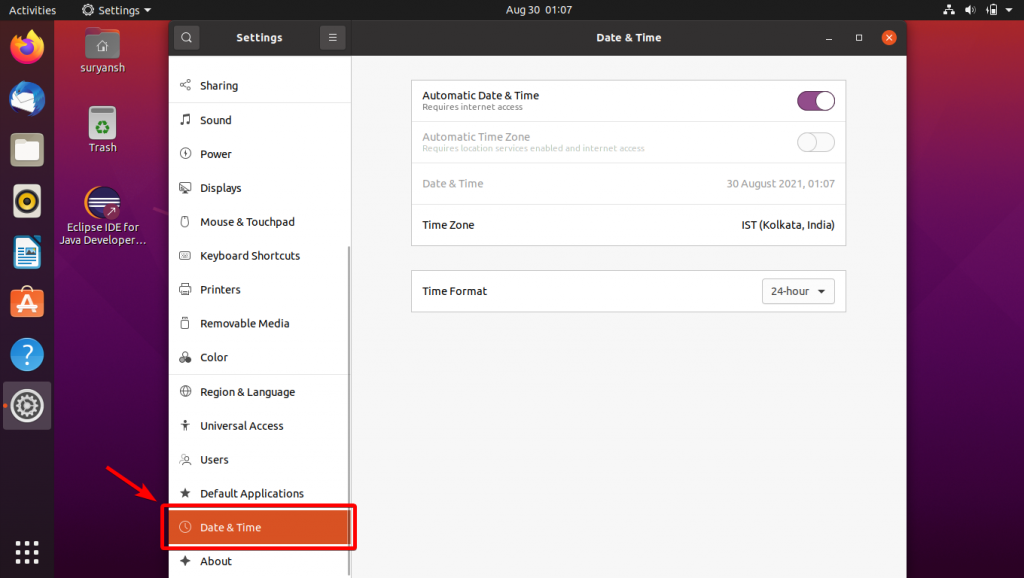
Ubuntu 20.04 shows Date & Time directly in the Settings sidebar. Current Ubuntu Settings groups the control under System.
1. Open Settings from Activities
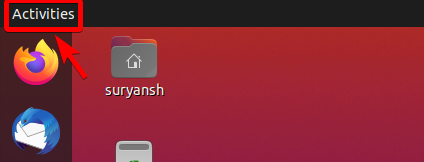
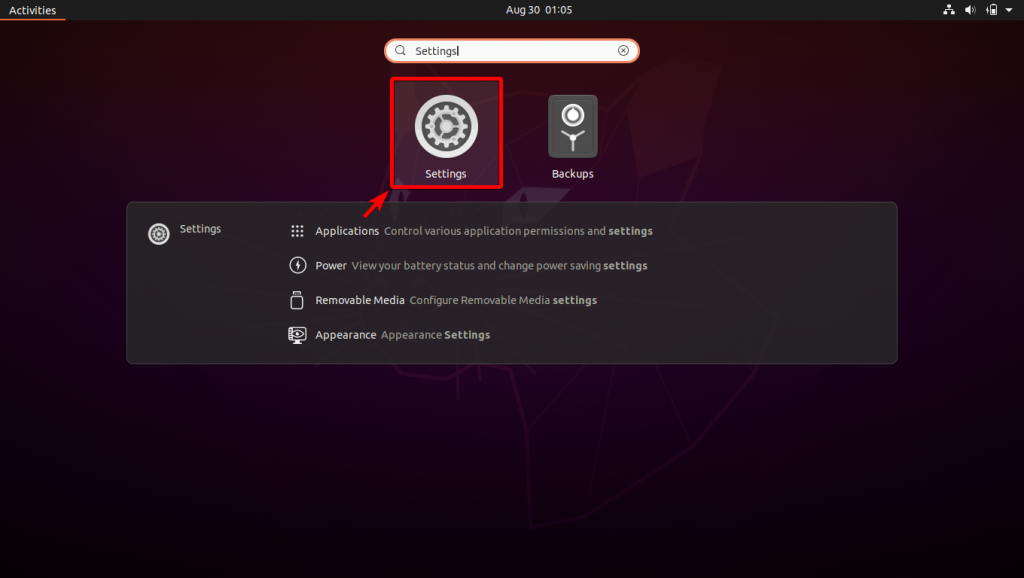
Open Activities in the top-left corner, then type Settings in the search field.
Select the Settings gear from the search results to open the control panel.
2. Open Date & Time
On the current documented route, search Activities for System, open Settings, then select System and Date & Time. Ubuntu 20.04 puts Date & Time in the left sidebar instead.
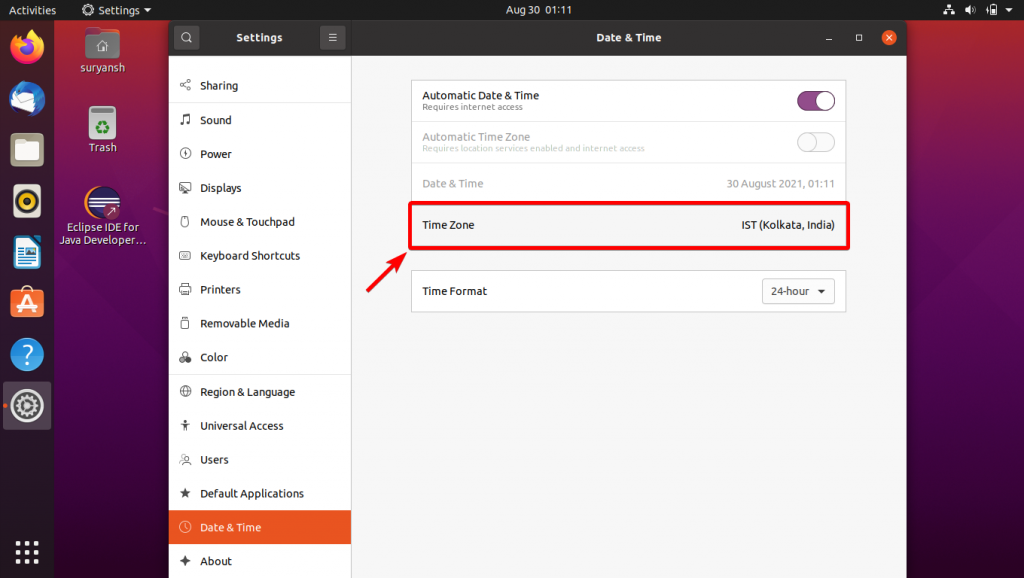
Ubuntu documentation says Automatic Time Zone needs an internet connection and enabled location services. Turn it off when you want to select a location manually, then open Time Zone.
3. Choose the city for your timezone
Search for a city in your region, select the matching result, and close the picker. The picture uses Kolkata as an example, so choose the location whose civil-time rules you need.
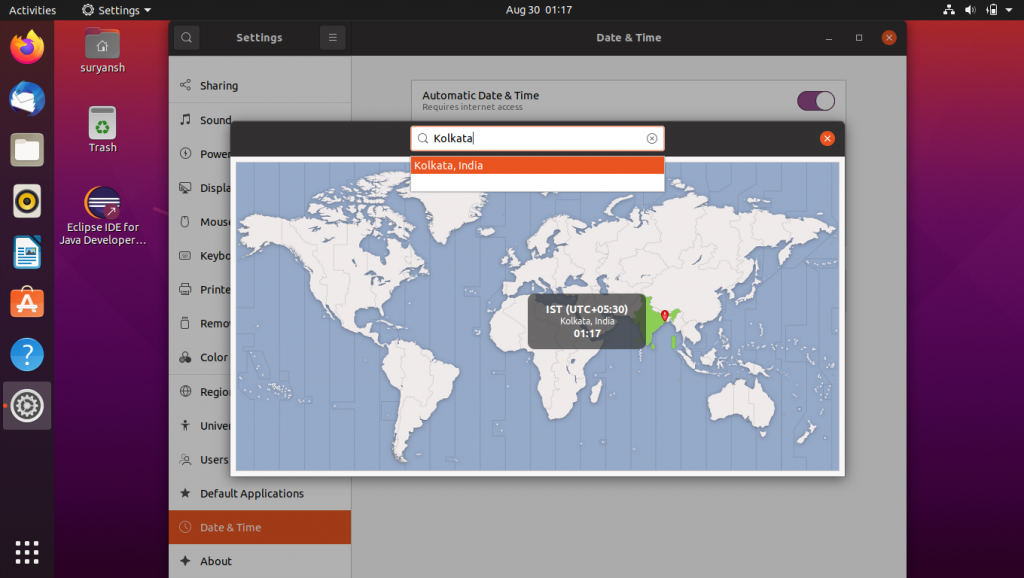
The desktop setting applies to the system, so programs that use Ubuntu’s local timezone display the updated local time.
Set the timezone from the terminal
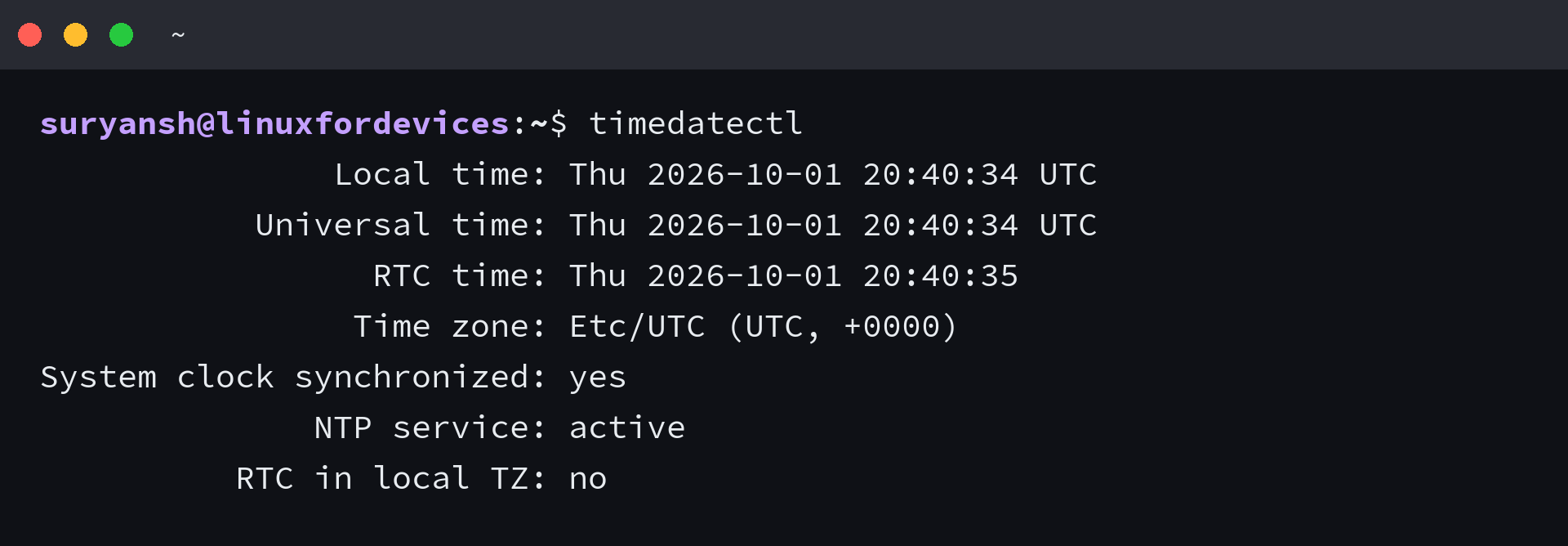
On Ubuntu Server or in a terminal, timedatectl shows the current zone, lists the installed names, and applies a system-wide change. Read the current setting before changing it, then copy a valid name from the list.
1. Read the current timezone
Run timedatectl to see Local time, Universal time, Time zone, and synchronization status before making a change.
timedatectl
2. Find the exact timezone name
Timezone identifiers name a region, such as America/New_York, so Ubuntu can apply that location’s time rules. Search the installed list for a city or region you recognize, then copy the complete identifier.
timedatectl list-timezones | grep -F 'America/New_York'

To browse the full list, run timedatectl list-timezones. If you use grep, replace America/New_York with a place name that narrows the results.
3. Set the system timezone
Pass the identifier you selected to timedatectl set-timezone. The command needs administrator permission, so keep sudo and replace the example with the exact name from your list.
sudo timedatectl set-timezone America/New_York
The timedatectl manpage says this command changes the /etc/localtime link used for local-time rendering. It does not set the system clock to a different instant.
4. Confirm the stored name
Read the timezone property after the setting command completes. The output should be the same identifier you selected, such as America/New_York.
timedatectl show --property=Timezone --value
When the displayed time is still wrong
Check the Time zone row first. If it shows the intended region, inspect synchronization status next, because a correct zone cannot repair an inaccurate system clock.
| Symptom | Check | Next action |
|---|---|---|
| The setter rejects the zone | Compare its spelling with the listed identifiers | Copy a valid name from timedatectl list-timezones |
| The zone is correct but time drifts | Read the clock synchronization state and identify its service | Use the Ubuntu time synchronization guide |
| Windows and Ubuntu show different local times | Check whether the machine dual-boots and whether both systems interpret the hardware clock the same way | Compare with this dual-boot time mismatch explanation |
| The command says permission is denied | Confirm the account can use sudo | Ask an administrator or read how to add a user to sudoers |
When the zone is correct but a command prints a different date format or offset, compare its behavior with the Linux date command guide. A shell can format a timestamp separately from the system-wide timezone.
The timezone name carries local rules
A named timezone represents a region’s civil-time rules, including changes made by local governments, as catalogued in the Internet Assigned Numbers Authority’s timezone database. After changing it, read back the stored name because the UTC offset reflects the value in force at that moment.
timedatectl show --property=Timezone --value
Ubuntu timezone questions
Does changing the timezone change the system clock?
Changing the timezone changes how Ubuntu renders the current instant as local time. If the clock itself is inaccurate, check time synchronization separately.
Does the timedatectl timezone setting survive a reboot?
Yes. timedatectl sets the system timezone through the localtime setting, so the selected zone remains configured across reboots unless another tool changes it.
Why is Automatic Time Zone unavailable in Ubuntu Settings?
Ubuntu’s automatic timezone option needs an internet connection and enabled location services. You can choose a timezone manually in Date & Time when the control is available.