

Ubuntu calls its graphical software browser App Center, while the package behind it is snap-store. If the icon is missing or the app will not start, reinstalling snap-store is the direct repair path on a supported Ubuntu desktop.
Check what needs repair
Open the application overview and search for App Center. Ubuntu’s desktop documentation uses App Center to install both snap packages and Debian packages, so a missing launcher is different from a single app that will not install.
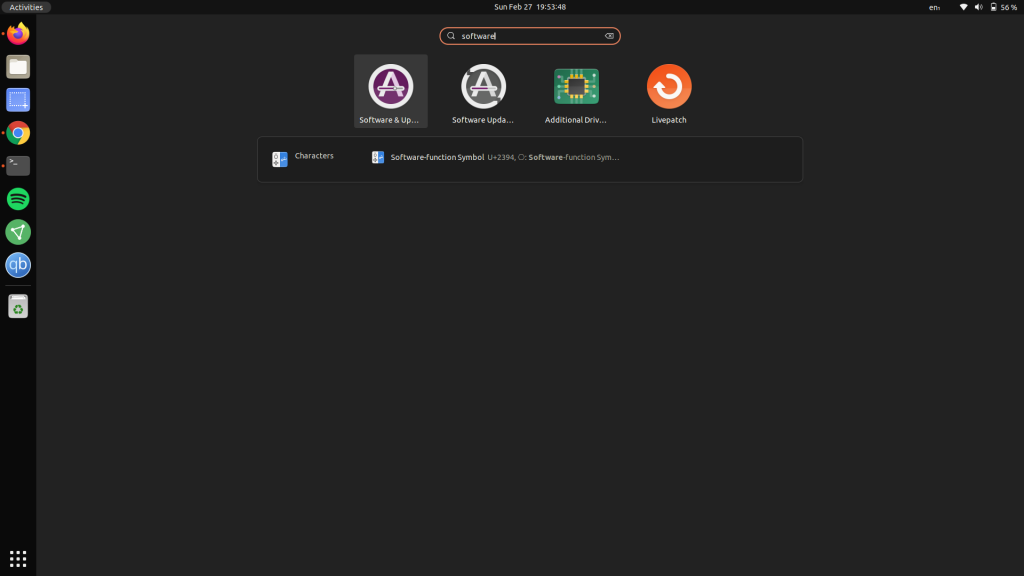
If App Center opens but one Debian package fails, start with the package manager rather than removing the store. The Linux package management overview helps you choose the tool that owns that package.
Reinstall App Center with snap-store
Snapcraft publishes App Center as the snap-store package, and this command installs it when it is absent.
sudo snap install snap-store
Enter your account password when sudo requests it, and repair a snapd service failure before retrying because the command needs both snapd and Snap Store access.

The retained terminal capture shows the download stage, so wait for the command to return to the prompt before searching for App Center again.

The install confirmation means the package is available, but it does not prove that every application source or desktop session problem is fixed.
Verify that the launcher returned
Press the Super key, search for App Center, and open it to search or browse, choose an application, and select Install.
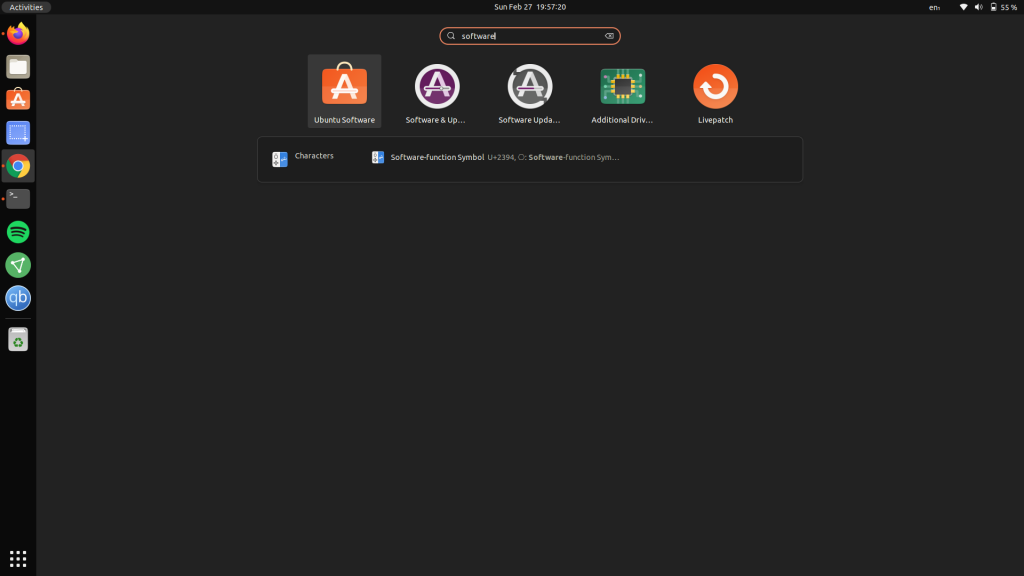
The retained desktop capture shows the expected launcher state, while a launcher that still will not open calls for a session restart and a snap service check.
When removal is appropriate
Remove snap-store only when you intend to reinstall it, because this removes the graphical browser until you run the install command again without removing installed applications.
sudo snap remove snap-store

Use this only as part of the reinstall sequence. For a different graphical catalog for Debian packages, install GNOME Software on Ubuntu rather than treating it as a repair for App Center.
Choose the repair that matches the failure
| What you see | Best next move |
|---|---|
| App Center is missing | Install snap-store with the snap command. |
| App Center is present but one Deb will not install | Check the Debian package and its dependencies. |
| A snap application will not install | Check snapd and the Snap Store connection before reinstalling App Center. |
| You want Debian-only browsing | Use GNOME Software as a separate catalog. |
This boundary matters because App Center manages more than one package format. A broken dpkg transaction needs a Debian package repair, while a Snap Store connection issue belongs to snapd.
- Confirm that App Center is missing or cannot open.
- Run sudo snap install snap-store and wait for the installed result.
- Search for App Center in the application overview and open it.
- Test one application install before changing package sources or removing the store again.
Related Ubuntu package tasks
Use the next guide that matches the package format or failure rather than applying the App Center reinstall to every software problem. The Firefox Snap-to-Deb decision explains why package format changes need a deliberate choice.
If a Debian transaction stops with an error, follow the dpkg error repair steps. If the command line itself is unfamiliar, the Linux command line primer covers the terminal workflow used here.