

A Linux torrent client handles a torrent file or magnet link, connects to peers, and writes the pieces it receives to disk, so choose qBittorrent for a capable desktop client without ads, Transmission for a smaller interface, Deluge for its client and daemon design, KTorrent for KDE Plasma, or Fragments for GNOME.
Use torrent software only for material you are allowed to share or download, including Linux distribution ISOs and open-source project releases, because the client cannot determine whether a particular download is permitted.
Choose a Linux torrent client by the job
The client changes the controls and workflow, not the BitTorrent protocol. Start with the smallest tool that covers the way you plan to add, monitor, and seed downloads.
| Client | Best fit | Why choose it |
|---|---|---|
| qBittorrent | Most desktop users | Full desktop controls, RSS, search, and a Web UI |
| Transmission | A minimal desktop or simple daemon | A restrained interface with separate desktop, CLI, and daemon packages |
| Deluge | A remote client with selectable features | A client and daemon design with a plugin system |
| KTorrent | KDE Plasma desktops | A KDE-native interface and KDE integration |
| Fragments | GNOME and Flatpak users | A focused GNOME interface built on Transmission |
Each choice can open a torrent file and a magnet link. Pick qBittorrent when you want the broadest set of desktop controls, then use its qBittorrent setup guide for a closer look at its interface and preferences.
qBittorrent for a complete desktop client
qBittorrent is a strong default because its queue, per-torrent limits, categories, RSS downloader, and Web UI remain available without turning the main screen into an ad surface. Its Web UI also gives you a path to a browser-controlled setup without changing clients.
Install the Ubuntu package with the command below. The repository package supplies the graphical application, while qBittorrent-nox is the separate headless package for a server or remote Web UI.
sudo apt update && sudo apt install qbittorrent
Paste a magnet link with the add-link control, choose a download location, and keep seeding if the release terms allow it. If the default light interface is the only objection, you can enable qBittorrent dark mode instead of moving to another client.
The retained interface capture shows the queue view where progress, peers, and transfer rates sit together. Use those columns to spot a stalled job before changing tracker or connection settings.
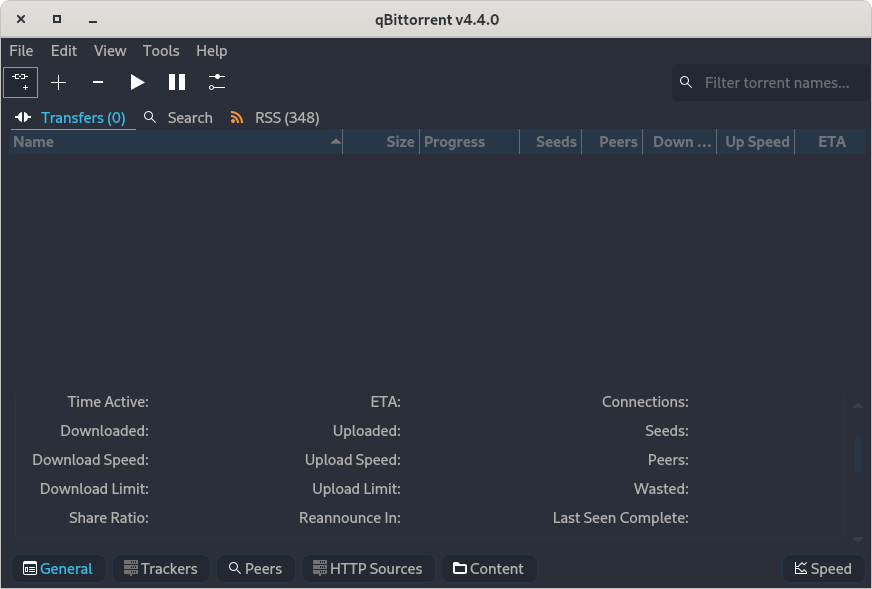
Choose qBittorrent-nox when the computer downloading files has no desktop session. The qBittorrent-nox self-hosting guide covers the separate daemon workflow, which needs an unprivileged service account and access controls rather than the desktop app’s local window.
Transmission for a minimal interface
Transmission is a sensible choice when you want a compact client and do not need qBittorrent’s larger set of built-in workflow tools. The project ships separate GTK, Qt, daemon, and command-line front ends, so the package name matters when you install it.
Use the GTK package for a typical Ubuntu desktop. The daemon package is a different installation for an always-on machine, not an extra switch inside the GTK window.
sudo apt update && sudo apt install transmission-gtk
The retained capture shows why Transmission suits a simple workload. Add a magnet link, set the destination, then use the list to pause, remove, or inspect each transfer without a crowded control panel.
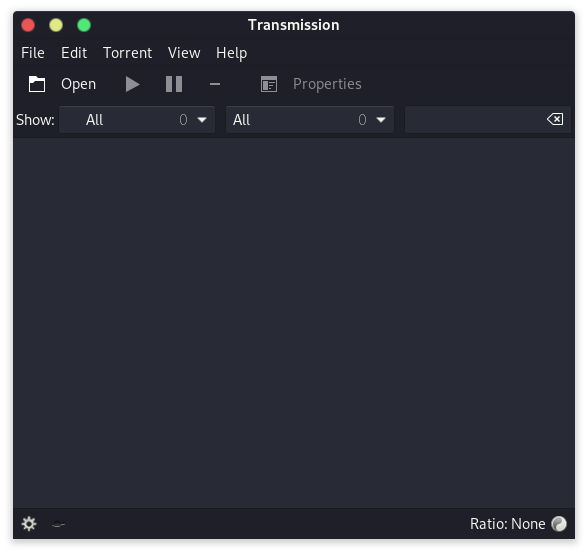
If you need help with the daemon, remote administration, or the desktop workflow, use the site’s Transmission installation and setup walkthrough. It is a better next step than exposing the daemon’s management interface to the public internet.
Deluge when you need a client and daemon
Deluge separates the client from the daemon, which is useful when the machine doing the downloading is not the machine where you manage the queue. Its plugin system also lets you add functions instead of carrying every feature in the default interface.
The graphical Ubuntu package installs with this command. Install Deluge from your distribution’s package source when possible, then use the project’s documentation if you need a daemon, Web interface, or distribution-specific package.
sudo apt update && sudo apt install deluge
The queue capture is useful when you are deciding whether Deluge’s denser side panels suit your workflow. The selected torrent exposes its files, peers, and options without leaving the main client window.
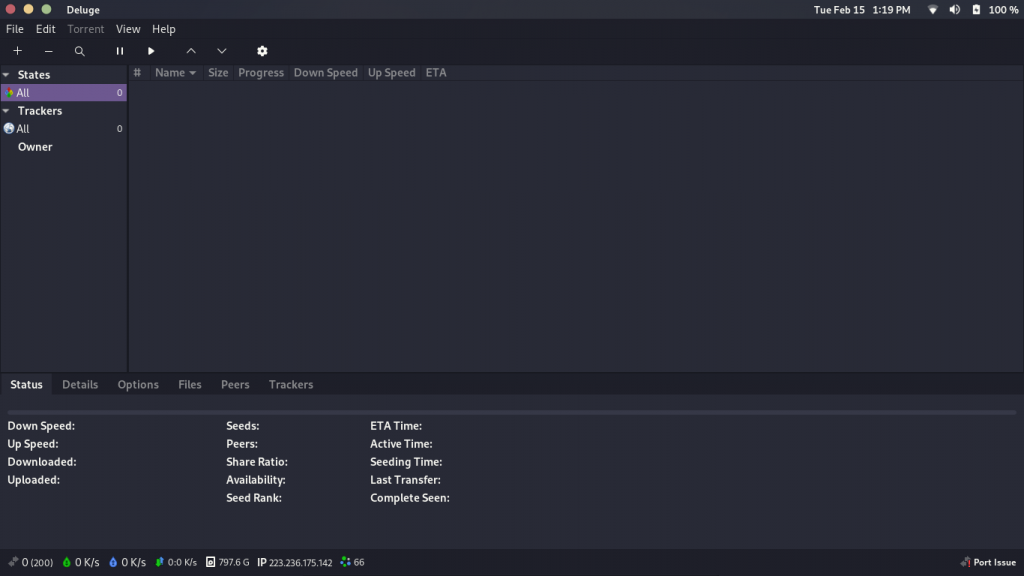
Deluge has more setup surface than Transmission. Choose it when the remote-client model or plugins solve a task you already have, not merely because a larger settings menu looks more capable.
KTorrent for KDE Plasma
KTorrent fits a KDE Plasma desktop when you prefer a client built around KDE’s interface conventions. It gives you a full desktop queue without asking you to run a browser-managed service.
Install the Ubuntu package from your distribution repository with the following command, because availability and version can vary by release and third-party package sources should remain a last resort.
sudo apt update && sudo apt install ktorrent
The retained KTorrent screen shows its transfer list and status detail, which suits a KDE Plasma desktop when KDE integration matters more than using the same client across several desktop environments.
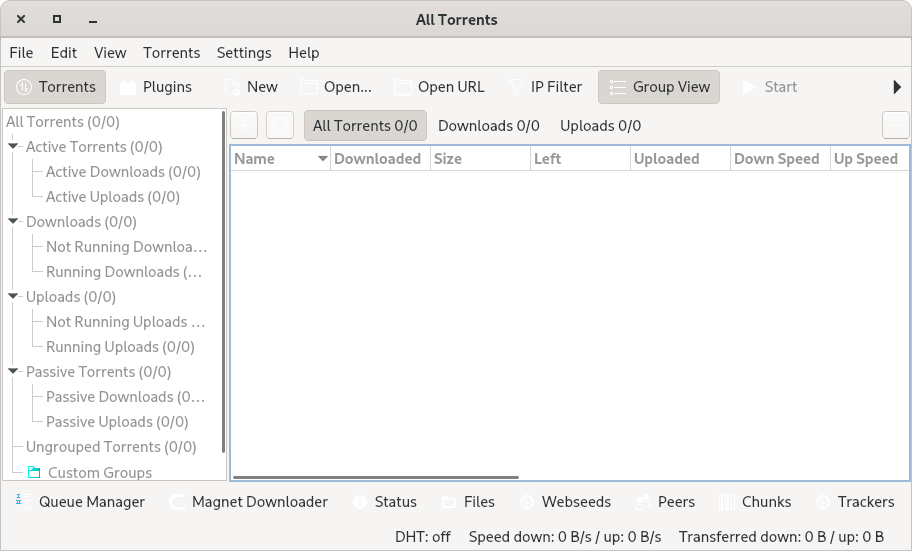
A desktop-client shortlist does not need every alternative. Orion Torrent Client is worth considering if its packaging and interface better match your system, but it should not replace a client you already understand and maintain.
Fragments for a GNOME Flatpak workflow
Fragments is the focused GNOME option. It uses Transmission underneath, but presents the simpler GNOME application style and is distributed through Flathub.
Confirm that Flatpak is installed and Flathub is configured before running the install command, then keep the application ID intact when you paste it.
flatpak install flathub de.haeckerfelix.Fragments
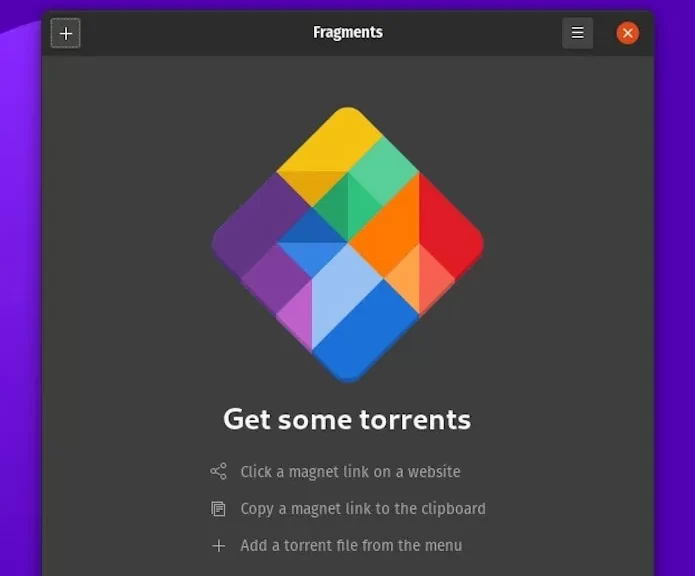
The retained screen shows the uncluttered task Fragments is built for: add a torrent, inspect its progress, and manage the result from a GNOME-native window. It is a good fit when the Flatpak delivery model is already part of your desktop setup.
If you want a separate tool for locating public torrent sources, Torrhunt’s setup guide covers that browser-style task. Keep search and download decisions separate, then verify the publisher and checksum when a project provides one.
Install safely and verify the download
Use your distribution repository or the project’s official download page instead of random package mirrors. A torrent client has access to the files it downloads, so do not treat a magnet link’s name as proof that the payload is what it claims to be.
- Get the torrent or magnet link from the project or publisher you intend to use.
- Choose a destination with enough free disk space, then add the item to the client.
- Compare the completed file against the publisher’s checksum or signature when one is provided.
- Keep seeding only material you may distribute, and remove completed data you no longer need.
qBittorrent is the best starting point for a full desktop client. Transmission is the cleaner choice for a small interface, Deluge fits a remote daemon model, KTorrent belongs on KDE Plasma, and Fragments fits a GNOME Flatpak desktop.
Which torrent client is best for Linux?
qBittorrent is the best default for most Linux desktop users because it combines a full torrent queue, categories, RSS support, and a Web UI without ads. Choose Transmission when you want fewer controls, Deluge for a remote client and daemon design, KTorrent for KDE Plasma, or Fragments for a GNOME Flatpak workflow.
Can I install a Linux torrent client from my distribution repository?
Yes. qBittorrent, Transmission, Deluge, and KTorrent are available through many distribution repositories. Use your distribution repository or the project’s official download page, then confirm the package name for your distribution release.
Are torrent clients legal on Linux?
Torrent clients are legal software. Whether a download is permitted depends on the material and its license, so use torrents only for files you are allowed to download or share.