
I paired my Android phone with my Linux desktop over KDE Connect and ran every step below against current documentation and packages. You get a working phone to desktop link for files, notifications, media control, and remote commands, plus the two fixes that solve most failed pairings.
KDE Connect joins your phone and your computer over your local network. It is free and open source, the connection stays on your own network, and the desktop client runs on every major Linux distribution. Phone apps exist for Android and iPhone, and desktop builds exist for Windows and macOS as well.
Once paired, your phone becomes a remote control for the desktop. You can push files both ways, answer texts from the keyboard, pause music from the couch, and run preset commands such as lock screen or shutdown. The screenshot below shows media playback on the PC driven from the phone.
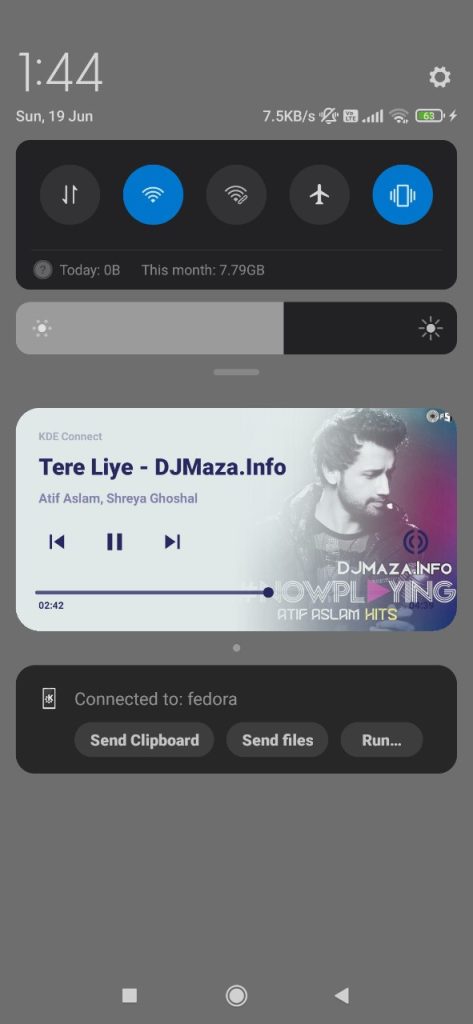
That media plugin works in both directions. Your phone can steer desktop players, and desktop controls can steer playback queues exposed by the phone app.
What KDE Connect gives you
Each ability below is a plugin you can switch on or off after pairing. Turn on only what you need, since every enabled plugin asks for matching permission on the phone.
- File and link sharing between phone and computer, including remote browsing of phone files from the desktop.
- Phone notifications mirrored on the desktop, with direct replies to text messages from the computer.
- Shared clipboard, so text you copy on one device pastes on the other.
- Multimedia control, with track, volume, and queue commands going either way.
- Phone as remote input, acting as touchpad, keyboard, and presentation clicker.
- Preset desktop commands run from the phone, such as lock screen or shutdown. You can add your own commands too.
- Find my phone ringing plus live phone battery level on the desktop.
If you only move files between two Linux machines on your home network, Ubuntu folder sharing over LAN is the lighter tool. KDE Connect earns its place when a phone joins the setup. If you mirror the whole phone screen instead of sharing selected files, my guiscrcpy walkthrough covers that path.
Install KDE Connect on Linux
The desktop client ships in the official repositories of every major distribution. I confirmed the current package names against Fedora package metadata, the Arch package database, and the Ubuntu 24.04 archive, which carries kdeconnect 23.08.5. Install it from your software center or run the matching command.
# On Ubuntu and Debian based distributions
sudo apt update && sudo apt install kdeconnect
# On Fedora Workstation
sudo dnf install kde-connect
# On Arch Linux and Arch-based distributions
sudo pacman -S kdeconnect
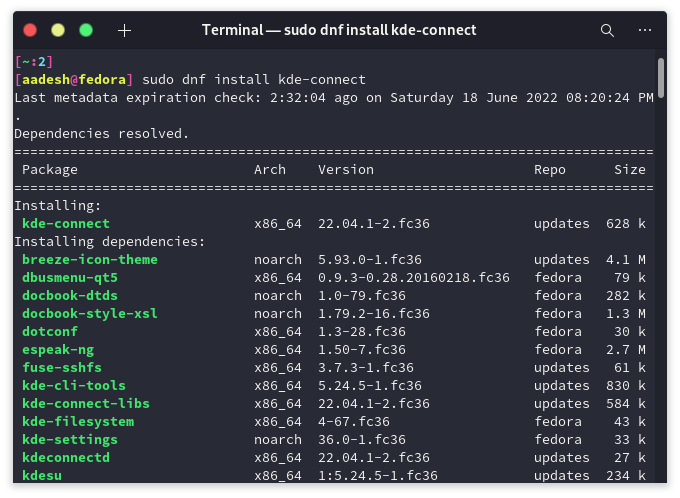
Fedora users sometimes guess the name wrong. The Fedora project publishes it as kde-connect, so the middle command above is correct. The screenshot below shows that Fedora install finishing cleanly.
GNOME users get a choice. Plain KDE Connect works on GNOME, but GSConnect implements the same protocol as a native shell extension with closer file manager integration.
Pick one of the two, since they conflict when both run. KDE Plasma users should stay with KDE Connect.
Then install the phone app. Android users get it from Google Play or F-Droid, and iPhone users get the native port from the App Store. Windows users can install from the Microsoft Store.
Keep the desktop and phone apps updated together, since new features need both sides current.
Pair your phone and your computer
Pairing takes about a minute when both devices share one network. Follow these steps in order.
- Join both devices to the same Wi-Fi network. A phone on mobile data never sees the desktop.
- Open KDE Connect on the desktop and on the phone. Each side lists the other within seconds.
- Select the desktop on the phone and tap request pairing, then accept the request on the desktop.
- Grant the phone permissions the features need, covering contacts, call log, SMS, storage, and notification access. The screenshot below shows that permission screen.
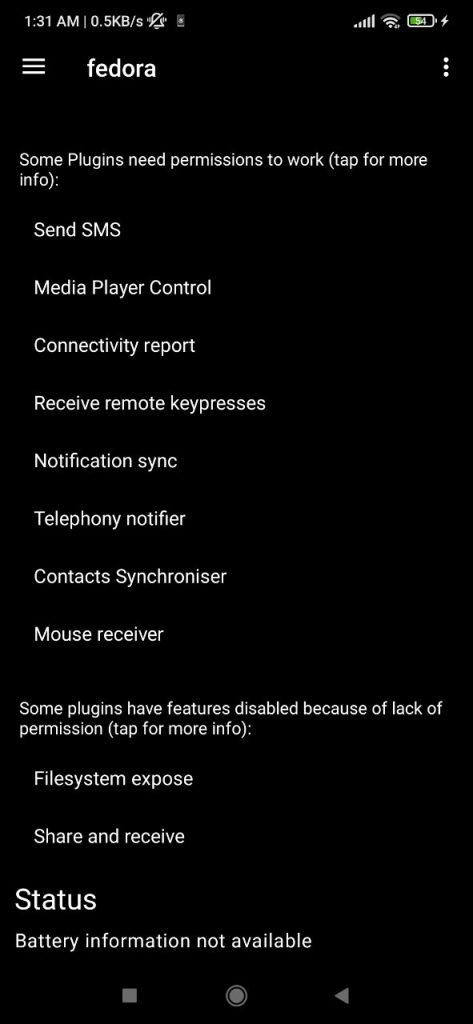
Permissions map to plugins one to one. Notification replies need notification access, file browsing needs storage access, and SMS features need the phone and messaging permissions. If you connect over USB instead of Wi-Fi for other tasks, my USB Android guide covers that separate path.
Choose which integrations stay on
Open the desktop settings after pairing and review the plugin list. The main window below shows a connected device with its available integrations.
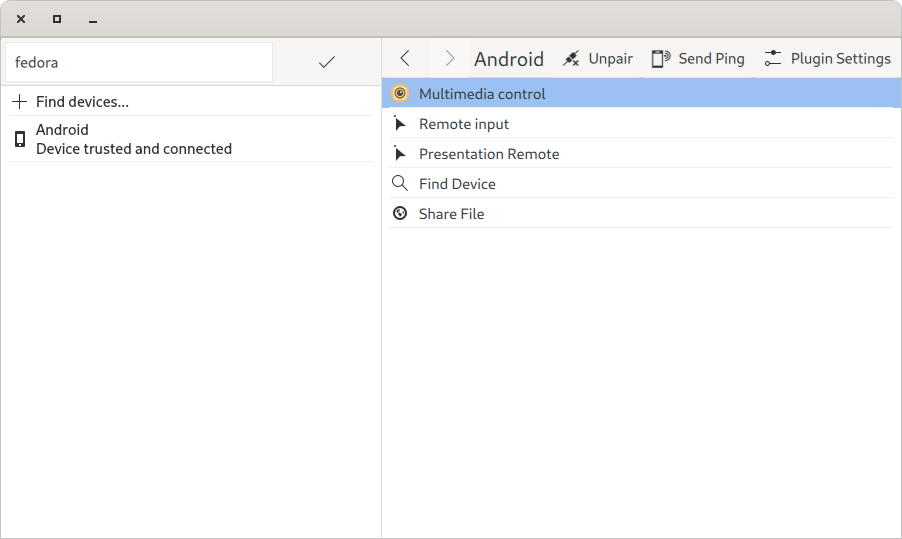
Keep file sharing, notifications, and media control on for the standard setup. Add remote input and preset commands only if you present or control the PC from a distance. The settings view below is where each plugin toggles.
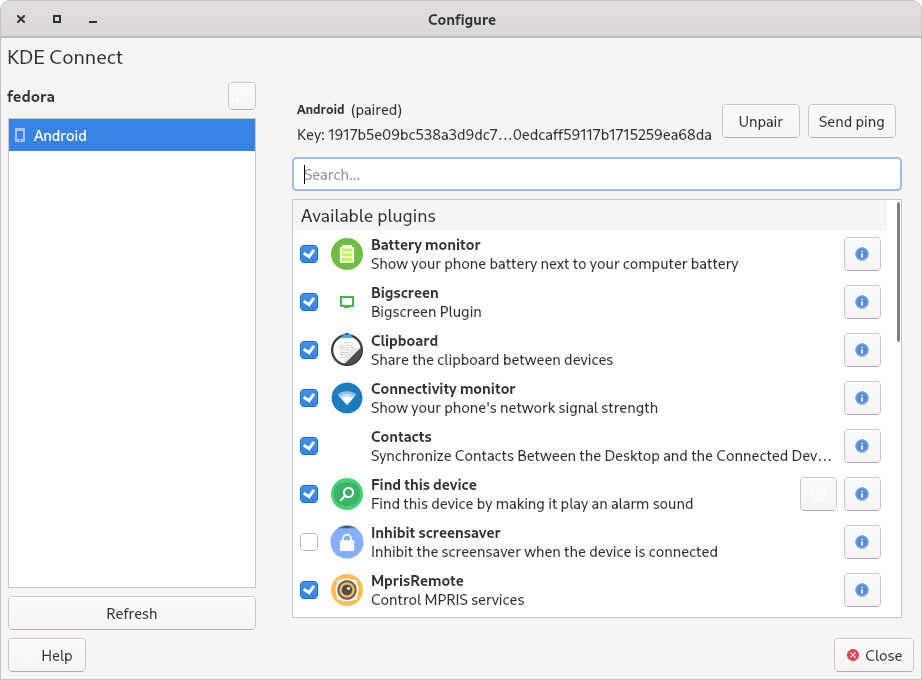
Traffic between paired devices is encrypted, and both codebases are open source. Still, keep pairing to networks you trust, since a paired phone can run your preset desktop commands.
When the devices cannot see each other
Almost every failed pairing traces to the network, not the app. Work through these checks in order.
- Confirm both devices sit on the same Wi-Fi network and band. Guest networks often isolate clients from each other.
- Open TCP and UDP ports 1714 through 1764 on the desktop firewall. On Ubuntu the commands look like this.
- Restart the desktop daemon and refresh discovery, then try pairing again.
- Enter the desktop IP address manually in the Android app under pair new device and add devices by IP.
# Allow KDE Connect discovery and traffic through UFW
sudo ufw allow 1714:1764/udp
sudo ufw allow 1714:1764/tcp
# On Fedora, the matching firewalld rules are
sudo firewall-cmd --zone=public --add-port=1714-1764/tcp --permanent
sudo firewall-cmd --zone=public --add-port=1714-1764/udp --permanent
sudo firewall-cmd --reload
# List visible devices, then refresh discovery
kdeconnect-cli -l
kdeconnect-cli --refresh
If the desktop runs a VPN, discovery usually fails because VPN tunnels reroute local traffic. Disconnect the VPN for pairing, or check whether your client supports local network access alongside the tunnel. My Wi-Fi terminal guide helps when the desktop itself struggles to join the right network.
Summary
Install the matching packages, pair on one shared network, enable only the plugins you need, and open the discovery ports when devices stay invisible. For background on the older Android focused setup, my earlier Android to Linux walkthrough still applies. When your transfers grow beyond phone sharing, the rsync guide handles scripted bulk copies between Linux machines.
What is KDE Connect used for
KDE Connect links your phone and your Linux desktop over the local network. It syncs notifications, shares files and links, mirrors the clipboard, controls media playback, provides remote input, runs preset desktop commands, and rings a misplaced phone.
How do I pair my Android phone with Linux using KDE Connect
Join both devices to the same Wi-Fi network, open KDE Connect on both, request pairing from the phone, and accept on the desktop. Then grant the phone permissions for notifications, SMS, contacts, and storage so the matching plugins work.
Why is KDE Connect not finding my phone
Both devices must share one Wi-Fi network, and the desktop firewall must allow TCP and UDP ports 1714 through 1764. Restart the daemon with kdeconnect-cli –refresh, disconnect VPNs that block local discovery, or add the desktop by IP address in the Android app.
Should GNOME users install KDE Connect or GSConnect
Both speak the same protocol. KDE Connect runs on every desktop including GNOME, while GSConnect is a GNOME shell extension with closer file manager integration. Install only one of them, since they conflict when both run.
Does KDE Connect work with iPhone and Windows
Yes. KDE Connect ships a native iOS port on the App Store, a Windows build on the Microsoft Store, and a macOS release alongside the Linux and Android apps. Keep both sides updated together so new features work.