

After extracting Blender’s archive, its executable remains inside its own directory and can be launched by its full path. I find that distinction useful: the shell’s version check and the archive’s executable offer different launch routes.
Compare the available sources with the Blender version you need. Choose the install method that fits your Linux distribution.
Which Blender install method should you choose?
Blender is a free and open-source 3D creation suite, and your Linux package source determines which build you install.
Choose a distribution repository when its Blender version fits your work, or select the upstream archive or Snap channel when you need the version Blender publishes.
| Source | Install method | Version comes from |
|---|---|---|
| Ubuntu or Debian repository | APT package | Your configured distribution release |
| Fedora repository | DNF package | Your Fedora release |
| Snap Store | Blender Foundation’s verified Snap | The selected Snap channel |
| Blender.org | Linux archive | The release you download |
| Arch Linux repository | Arch’s pacman package manager | Your configured Arch repositories |
Ubuntu and Fedora packages follow their repository releases. The official archive follows the release you download, and Snap follows its selected channel.
Blender.org lists 5.2.2 LTS for Linux. Use its download page when you want to select and extract the upstream build yourself.
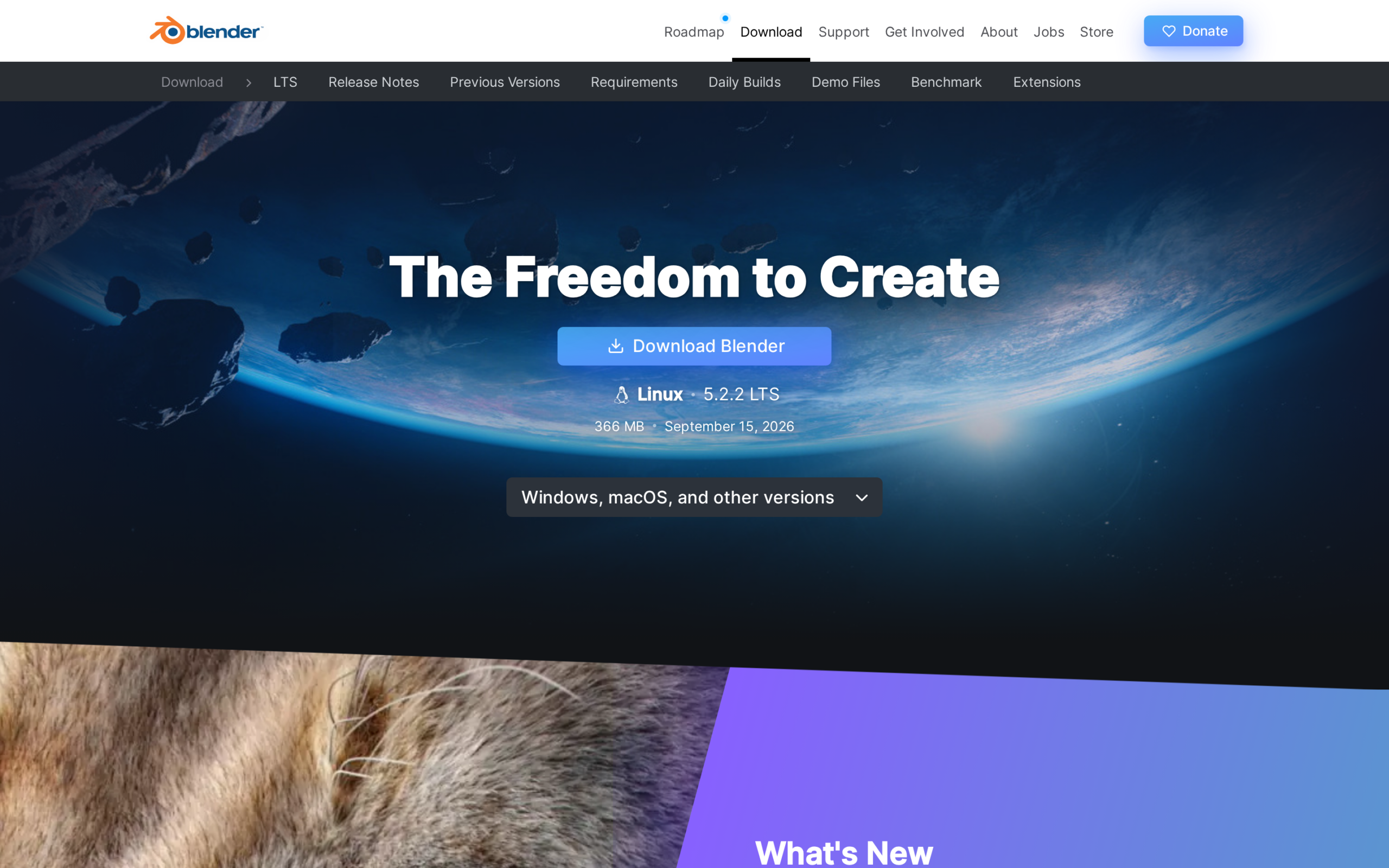
The download page links the Linux build and states its system-library requirement, while the official manual explains how to extract and start it.
What to check before installing Blender
The official requirements page lists a 64-bit Linux distribution with glibc 2.28 or newer as the upstream build’s minimum.
- A 64-bit Linux distribution with glibc 2.28 or newer for the upstream build.
- A build that matches your CPU architecture. The upstream Linux file linked below is x64.
- A four-core CPU with SSE4.2 support.
- At least 8 GB of RAM.
- A GPU with at least 2 GB of VRAM and OpenGL 4.3 or Vulkan 1.3 support.
Those are Blender’s listed minimums, not a promise that every project will render well on that hardware. A distribution package may have different build requirements, so check its package information when the upstream build does not match your system.
Install Blender on Ubuntu
Ubuntu gives you a repository package through APT, or you can use Blender Foundation’s verified Snap package when Snap support is enabled on your system.
Step 1. Install Blender from Ubuntu’s repository
APT installs the candidate from your enabled Ubuntu repositories. Refresh the package lists, install Blender, then ask Blender to print its version.
sudo apt update
sudo apt install blender
blender --version
Ubuntu 26.04 lists Blender 5.0.1, and Ubuntu 24.04 lists 4.0.2. Blender.org lists 5.2.2 LTS, so APT can install a different release from upstream.
Ubuntu publishes Blender in its universe repository, and the package page shows the version attached to each Ubuntu release.
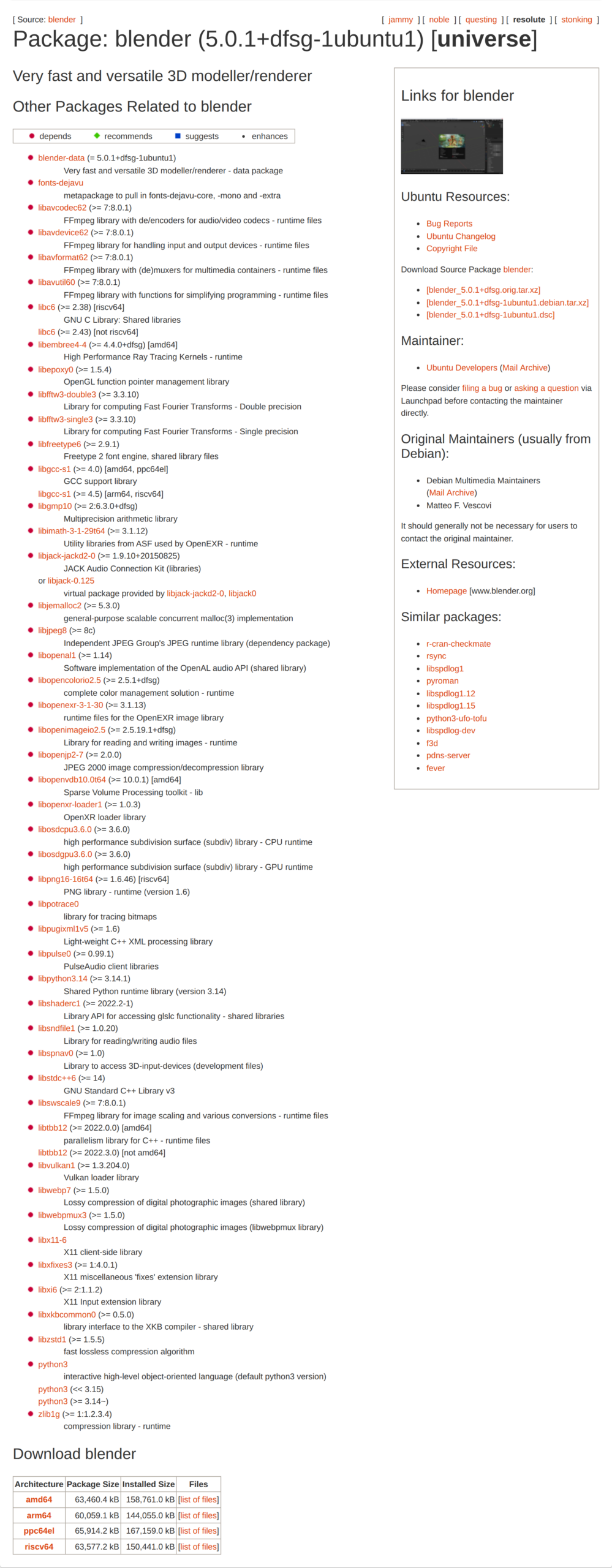
I chose APT for Ubuntu installs where the repository version fits your work. Our guide to listing installed Ubuntu packages helps confirm the package is present.
Step 2. Install Blender from the verified Snap
The Snap route needs snapd enabled on your distribution. The Snap Store identifies Blender Foundation as the verified publisher and lists version 5.2.2 on its latest/stable channel.
sudo snap install blender --classic
Blender’s Snap uses classic confinement, which Snap describes as equivalent to the full system access of a traditional unsandboxed package. Read its classic-confinement explanation before choosing the route, so you know what access the package receives.
The Blender Snap Store page shows the publisher and channel before you install. Compare that channel with the Ubuntu repository when the exact Blender release matters to your project.

After installation, run blender –version to check which command your shell resolves.
Install Blender on Fedora
Fedora’s DNF package manager installs Blender from the configured Fedora repositories. Check the stable package for your Fedora release before installing if you need a particular Blender version.
Step 1. Install the Fedora repository package
Fedora documents dnf install as its package-install command, and its package listings show Blender 5.2.2 for Fedora 44 and 45.
sudo dnf install blender
blender --version
The release table separates stable and testing builds. Use the Stable column for Fedora’s regular repository package.
| Fedora release | Stable Blender package |
|---|---|
| Fedora 45 | 5.2.2-2.fc45 |
| Fedora 44 | 5.2.2-1.fc44 |
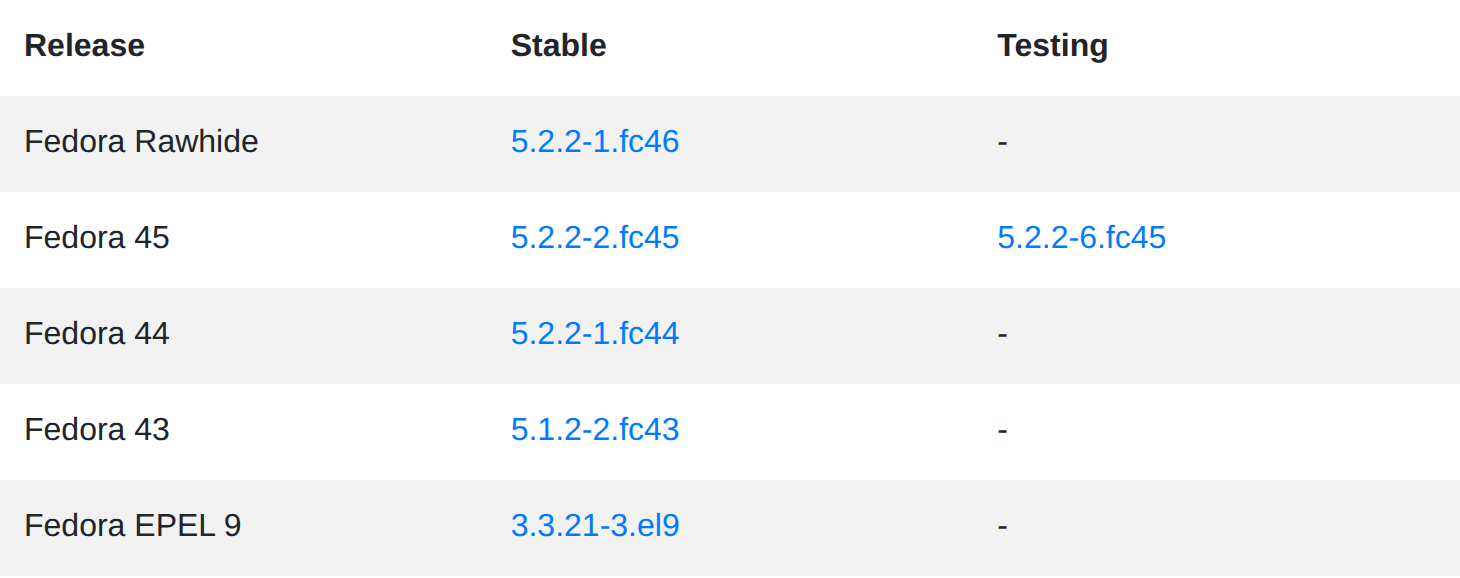
For the command’s available options, use the Fedora DNF documentation. If your Fedora repository carries a different version, choose the distro package only when that version fits your work.
Install the official Blender release on Linux
Blender.org offers an architecture-specific Linux archive, and the Blender Linux manual says to extract it to a chosen directory before launching its executable.
The direct archive gives you control over where each release lives. Blender’s manual notes that you can keep multiple versions in separate directories and launch the one a project needs.
Step 1. Download the Linux archive
Open the Blender download page and save the Linux archive in your Downloads folder. The linked x64 file is named blender-5.2.2-linux-x64.tar.xz.
If your CPU is ARM64, check your distribution’s package metadata for a build that matches it instead of running the x64 archive.
Step 2. Extract and launch Blender
Extract the TAR archive into a directory under your home folder and launch its executable, which keeps the upstream build separate from your distribution’s package.
mkdir -p "$HOME/Applications"
tar -xf "$HOME/Downloads/blender-5.2.2-linux-x64.tar.xz" -C "$HOME/Applications"
"$HOME/Applications/blender-5.2.2-linux-x64/blender"
Blender’s manual requires TAR extraction for this archive. Our Linux tar command guide explains how to choose an output directory.
Fix a Blender install that will not launch
Separate a package-source issue from a graphics requirement. These checks identify which layer needs attention before you replace the installation.
| Symptom | Check | Next action |
|---|---|---|
| The shell reports that Blender is not found after extracting the archive. | The executable is inside the extracted Blender directory. | Launch that executable by its full path, or open a terminal in the directory and run it there. |
| The installed version differs from the version you expected. | Check the version printed by the Blender command and the package source you selected. | Compare the distro package listing with the Snap channel or Blender.org release before changing sources. |
| Blender opens with a graphics error or fails during startup. | Check the graphics driver and Blender’s listed OpenGL 4.3 or Vulkan 1.3 minimum. | Use Blender’s current Linux requirements to compare your system and driver. A package reinstall will not correct an unsupported graphics API. |
If you need a Ubuntu DEB package for another application, our guide to installing DEB files on Ubuntu covers that package format. Blender.org’s Linux file is a tar.xz archive, not a DEB package.
Check the Blender version before opening a project
The package source determines which Blender build your launcher opens. A version check catches a mismatch before project compatibility becomes the next problem.
blender --version
Blender installation questions
Ubuntu repositories, Snap and Blender.org publish through separate package sources. Check the version and file format against the path you selected.
Does apt always install the current Blender release?
No, APT installs the candidate from your enabled Ubuntu repositories, so check that release’s Blender version before choosing this route.
Is the Blender Linux download a DEB package?
No, Blender.org’s Linux download is a tar.xz archive that you extract with TAR before launching, not a DEB package.
Can I change from the Ubuntu package to Snap?
Yes, but remove the APT build only if you no longer want that copy. Our guide to uninstalling packages with APT explains how to remove the Ubuntu repository package before choosing another source.
Remove the Ubuntu repository build with APT before switching sources, using our APT package removal instructions.