
Ask who created Linux and you’ll usually hear one name, Linus Torvalds. He started the Linux kernel in 1991 as a personal project while studying in Helsinki, and a much wider set of developers later built complete systems around it.
I’ll trace what came before Linux, from Unix to MINIX, and how the first distributions appeared.
What is Linux?
I use Linux here to mean the kernel, which manages a computer’s hardware and system resources, rather than the complete distribution built around it.
| Term | What it names |
|---|---|
| Linux | The kernel that manages system resources and lets programs use the hardware. |
| Linux distribution | A complete operating system assembled around a Linux kernel with system programs and applications. |
The Cornell Virtual Workshop’s Linux history makes the same distinction between the kernel and the distributions built around it. That difference answers the creator question more accurately than saying one person wrote every program in a Linux system.
What came before Linux?
Unix began at Bell Labs in 1969, after Bell Labs left the Multics project. Ken Thompson and Dennis Ritchie rewrote it in C in 1973.
| System | Place in the history |
|---|---|
| Multics | A joint research project between MIT and General Electric, with Bell Labs participating. |
| Unix | A smaller Bell Labs system begun after the Multics work. |
| GNU | A free Unix-like operating-system project announced in 1983. |
| MINIX | Andrew Tanenbaum’s teaching-oriented Unix-like system, released in 1987. |
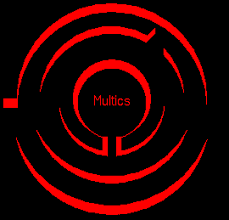
The Multics project history records Bell Labs leaving in 1969. A University of Maryland, Baltimore County oral-history page describes Thompson and Ritchie’s move to a smaller system.
Torvalds used MINIX as a Unix-like system to study while developing a separate kernel for his 386 computer.
Who created the Linux kernel?
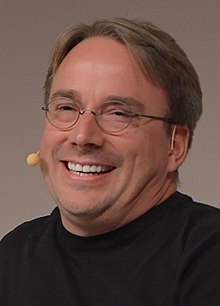
Linus Torvalds created the Linux kernel as a personal project while studying at the University of Helsinki. His public announcement went to the comp.os.minix Usenet group on 25 August 1991.
Torvalds described it as a free hobby project for 386 and 486 AT-compatible computers. His post asked MINIX users for feedback rather than presenting a finished operating system.
Hello everybody out there using minix – I’m doing a (free) operating system (just a hobby, won’t be big and professional like gnu) for 386(486) AT clones.
Torvalds asked MINIX users what to improve, which makes the post a request for feedback rather than a release announcement.
The Carnegie Mellon archive of Torvalds’s early posts preserves that message. Torvalds began the kernel, while later Linux systems depended on a much wider set of developers and software projects.
How did Linux grow from a kernel into a system?
Torvalds announced his project before the 0.01 source archive became available. Later license and distribution milestones made it possible for others to build complete systems around the kernel.
- Torvalds announces his project. His 25 August 1991 post asked MINIX users for feedback on a free system for 386 and 486 computers.
- Linux 0.01 sources appear. Torvalds’s account says the source archive became available later in 1991, and that this version was not yet runnable.
- Linux 0.12 moves toward GNU copyleft. Its release notes proposed terms that removed the restriction on distribution for money, pending approval from contributors.
- Distributions begin to appear. LWN’s account dates Softlanding Linux System to 1992, followed by Slackware and Debian in 1993.
- Linux 1.0 arrives. The kernel’s 1.0 release came in 1994, after developers had added features and hardware support beyond the first project.
I found a later licensing milestone in the Linux 0.12 release note, which proposed GNU copyleft terms subject to contributor approval.
Why do people say GNU/Linux?
GNU refers to a project and its free system software, while Linux names the kernel. They describe separate layers.
| Name | Role in a complete system |
|---|---|
| GNU | Provides system software such as command-line tools and libraries for a free operating-system environment. |
| Linux | Provides the kernel that manages processes, memory, devices, and other system resources. |
| GNU/Linux | Names a system that combines GNU software with the Linux kernel. |
The GNU/Linux FAQ uses GNU/Linux for systems formed by combining GNU software with the Linux kernel. Linux is also common shorthand for a full distribution.
The GNU Project was developing its own kernel, Hurd, as part of its operating-system work. Torvalds created Linux as a separate kernel project, which could later be combined with GNU tools.
How did Linux distributions develop?
A distribution combines the Linux kernel with system programs and package management to create an operating system. The included tools differ by project.
- Start with a distribution example such as this Puppy Linux overview, or try Kali Linux in VirtualBox.
- If Ubuntu is the system in front of you, check the Ubuntu version before following a release-specific instruction.
- Ubuntu software can arrive as a DEB file. See how to install DEB files on Ubuntu.
- The RPM package guide covers an alternate package format for Ubuntu. Arch Linux uses Pacman, covered in the Pacman package manager guide.
A distribution changes the software around the kernel, while Linux remains the shared core in these examples. People also use Linux to name the complete system, depending on context.
What does Tux represent?
Tux is Linux’s penguin mascot. Torvalds created the kernel, while contributors built complete distributions around it.

Check the kernel running on your system
The kernel release gives you a quick look at the Linux code running beneath your distribution. Run this command in a terminal to print the release string.
uname -r

The output names the running kernel release, not your distribution or its installed applications. A distribution combines the kernel with other programs, so Linux can also refer to the system built around it.
Linux history questions
Who created Linux?
Linus Torvalds created the Linux kernel as a project he began in 1991. Complete Linux distributions combine the kernel with software built by a wider community.
When was Linux created?
Torvalds announced his kernel project on 25 August 1991. The Linux 0.01 source archive appeared later that year, while Linux 1.0 arrived in 1994.
Is Linux a kernel or an operating system?
Linux names the kernel, while a Linux distribution combines that kernel with programs and system tools to form a complete operating system.
Why is it called GNU/Linux?
GNU/Linux names systems that combine GNU software with the Linux kernel. Linux is also common shorthand for a full distribution, though not every Linux-kernel system uses the same software around it.