

Spotube is an open-source music player built around installable metadata and audio-provider plugins. You can install Spotube on Linux, choose a provider you trust, browse its catalog, keep a local library, and manage playback without treating the app as an unofficial Spotify desktop client.
What Spotube does on Linux
Spotube runs as a native Flutter desktop application rather than an Electron shell. Its current design separates the player from the services that supply artist data, playlists, audio streams, lyrics, and scrobbling.
That plugin model changes the first-run task. Installation only puts the player on your system, while a metadata provider gives Browse and Search a catalog to display. An audio provider supplies playable streams when the selected integration needs one.
The Spotube project page describes the application as an extensible music streaming platform. The official plugin instructions also warn that the available list includes community repositories that are not curated.
Choose the right installation method
Flatpak is the cleanest default when your distribution already uses Flathub. If the remote is missing, set up Flatpak and enable Flathub before running the install command.
A distribution package fits systems where you want the package manager to resolve desktop dependencies, while the Arch User Repository (AUR) route is convenient on Arch-based systems. The broader Linux package-management overview explains how these routes differ.
| Method | Best fit | Main tradeoff |
|---|---|---|
| Flatpak | Most desktop distributions with Flathub enabled | Uses a sandbox and downloads the matching GNOME runtime |
| DEB package | Debian, Ubuntu, Linux Mint, and derivatives | You must download the package for your CPU architecture |
| RPM package | Fedora and openSUSE on x86-64 | The current upstream RPM is published for x86-64 |
| AUR package | Arch Linux and Arch-based distributions | You are trusting an AUR build recipe and helper |
Install Spotube with Flatpak
Use the Flatpak build if Flathub is already configured. Naming the remote in the command avoids the duplicate-remote prompt that appears when both user and system remotes expose the same application ID.
flatpak install flathub com.github.KRTirtho.Spotube
Flatpak displays the application permissions, runtime, download size, and remote before it changes the system. Review that summary, then approve the installation only if the remote is Flathub and the application ID matches.
Launch Spotube from your desktop menu or run the application ID directly.
flatpak run com.github.KRTirtho.Spotube
If Flatpak cannot find the application, check that Flathub appears in the remote list. The setup command belongs in your distribution’s Flathub instructions because the remote location can differ between system-wide and per-user installs.
flatpak remotes
Install the DEB or RPM package
The official downloads page publishes Linux packages for Debian or Ubuntu and Fedora or Red Hat systems. Match the filename to your CPU before downloading. x86_64 is common on Intel and AMD PCs, while aarch64 or arm64 is used by many ARM devices.
Debian, Ubuntu, and Linux Mint
Download the matching DEB file from the current Spotube release, open a terminal in the download directory, and let apt resolve its dependencies.
sudo apt install ./Spotube-linux-x86_64.deb
For an ARM system, use the aarch64 package and keep the filename aligned with what you downloaded.
sudo apt install ./Spotube-linux-aarch64.deb
A direct dpkg install can leave required libraries unresolved. apt reads the local package metadata and installs compatible dependencies from your configured repositories in the same transaction, which is the practical difference in the apt versus dpkg comparison.
Fedora and openSUSE
The current upstream RPM targets x86-64. Fedora users can install it with dnf, which resolves the dependencies declared by the package. The RPM installation walkthrough covers the same local-package flow in more depth.
sudo dnf install ./Spotube-linux-x86_64.rpm
On openSUSE, use zypper against the same downloaded RPM.
sudo zypper in ./Spotube-linux-x86_64.rpm
Arch Linux and Arch-based distributions
The AUR publishes spotube-bin as a prebuilt package recipe. Inspect the package build files before asking an AUR helper to install it, then use the helper you already trust. Manjaro users can review the separate steps for enabling the AUR.
yay -S spotube-bin
Avoid adding an extra database-refresh flag to a single AUR install command because your normal full-system update routine should keep repository and AUR packages synchronized.
Verify a downloaded package before installation
Package metadata catches the most expensive download mistake before it reaches the package manager. Run the field query from the directory that contains the DEB file.
dpkg-deb --field Spotube-linux-aarch64.deb Package Version Architecture
I checked the current ARM package and confirmed that it identifies itself as spotube, reports version 5.1.2+45, and targets arm64. The release checksum also matched the downloaded file.
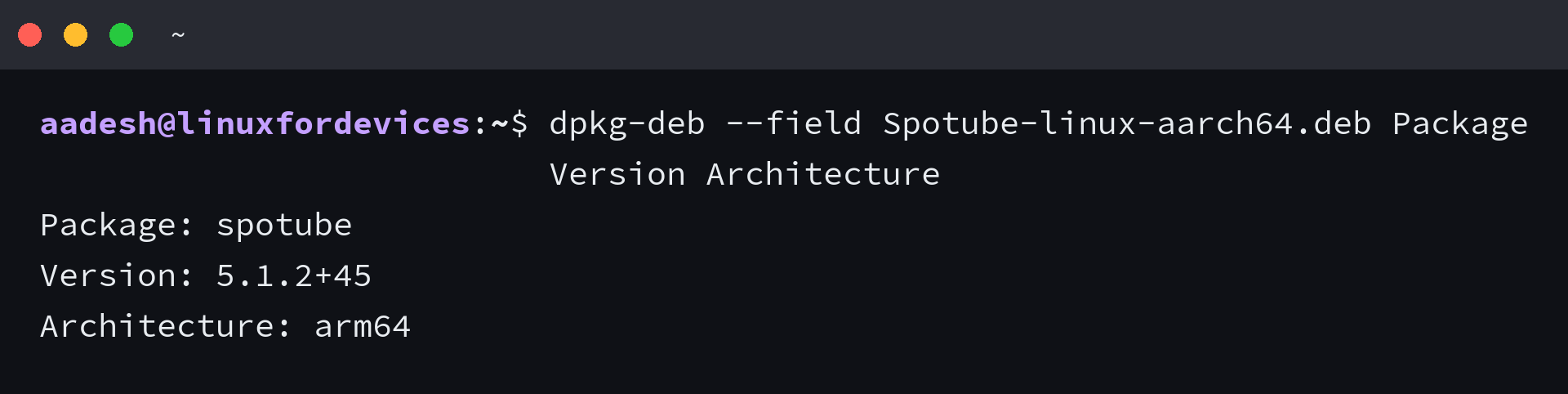
Compare Architecture with your system before installing. A package for the wrong CPU will fail even when its filename and download completed normally.
uname -m
Configure Spotube after the first launch
A new installation may open without a useful catalog because the player and the metadata source are separate. Install a metadata provider before treating an empty Browse or Search screen as a network failure.
- Open Spotube and select the Settings gear.
- Choose Metadata provider plugins at the top of Settings.
- Review the available provider list and prefer a plugin marked Official.
- Open the plugin source before installing if it is community-maintained.
- Install one provider, return to Browse, and test a search before adding another.
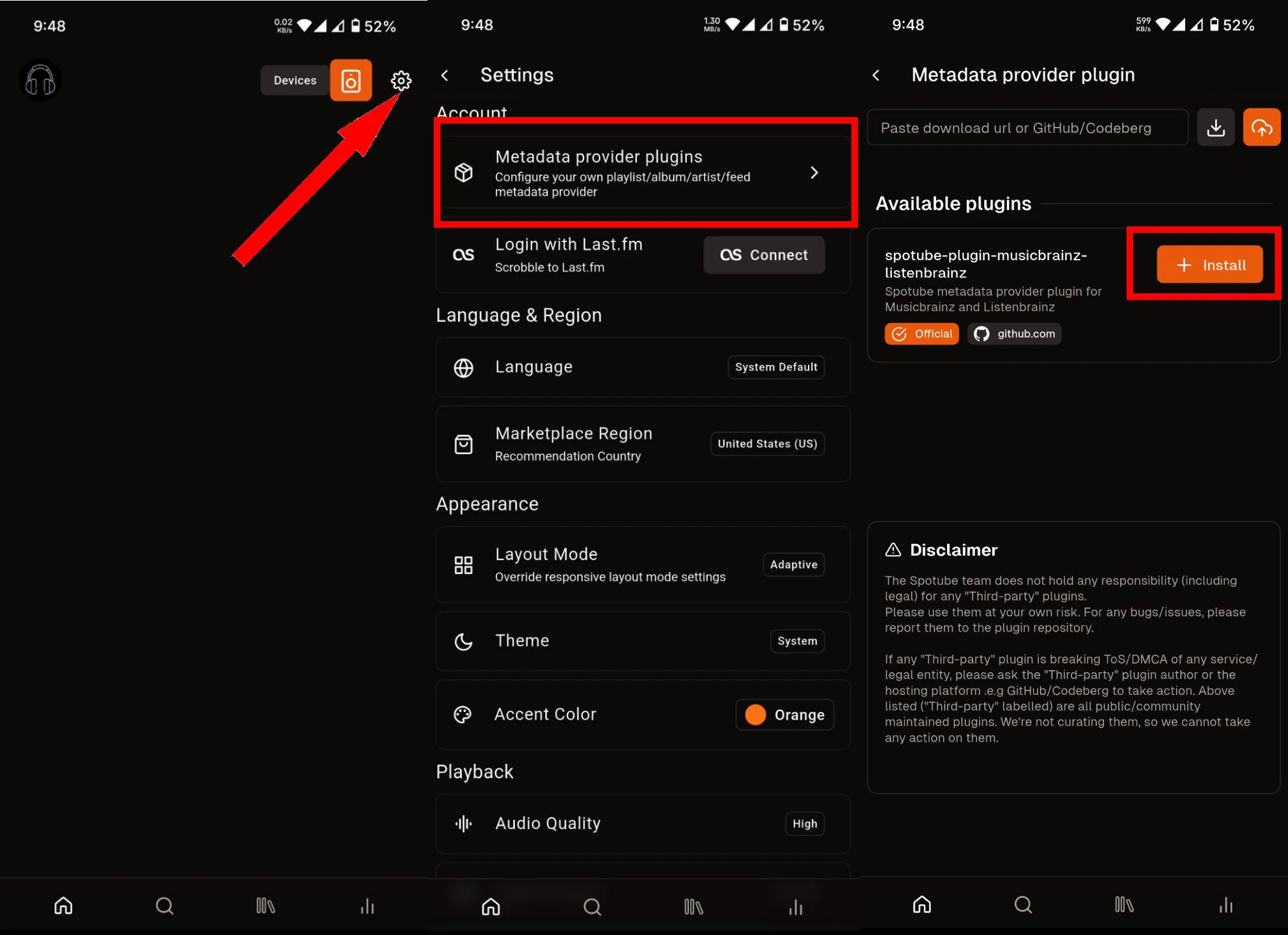
The plugin page accepts a local .smplug file or a direct plugin URL, but those routes need more scrutiny because a provider can handle service credentials and account data.
Source ownership and code review matter more than the convenience of a pasted link.
Browse, search, and manage your library
Browse populates recommendations and releases from the active metadata provider. Search queries that provider, while Playlists, Artists, Albums, and Local library keep different collection types separate.
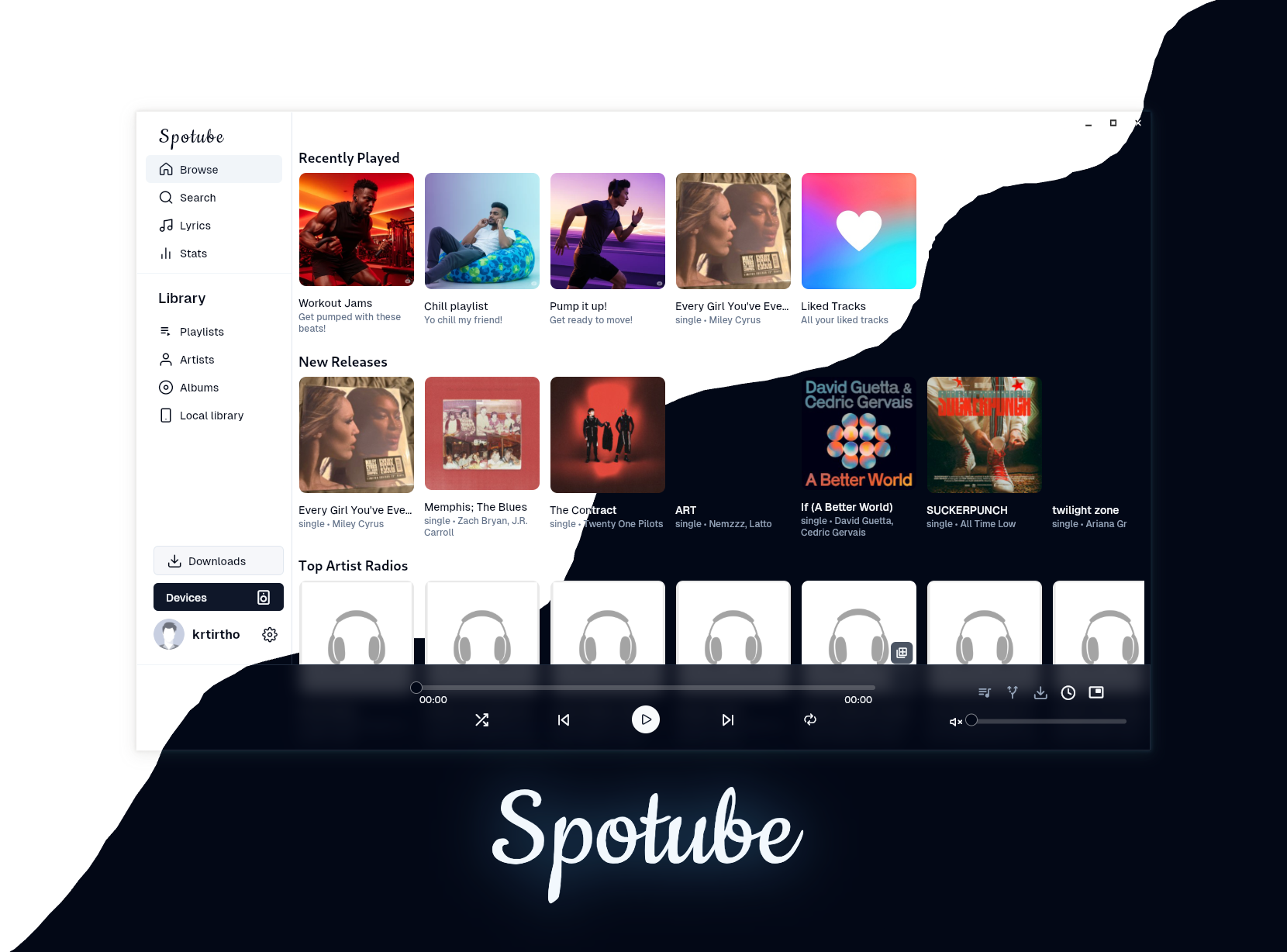
Test one track before importing playlists or changing several providers so you can separate catalog failures from audio-source failures while the active configuration is easy to diagnose.
Downloads are stored locally and can consume substantial disk space. Confirm the destination and format in Settings before starting a large queue, and respect the service terms and copyright rules that apply to the selected provider.
Fix common Spotube problems
Use the failing layer to choose the next check because reinstalling the player will not repair an unavailable provider, and switching plugins will not supply a missing desktop library required by a DEB package.
- Flatpak reports no matching application. Run flatpak remotes and confirm that Flathub is configured, then repeat the command with flathub named explicitly.
- Spotube opens but Browse and Search are empty. Confirm that one metadata provider is installed and enabled. Test that provider before installing more plugins.
- Search works but playback fails. Check the active audio provider, service availability, account requirement, and region settings. Metadata results do not prove that an audio source can serve the selected track.
- The DEB package reports missing dependencies. Install the local file with apt rather than dpkg so the package manager can resolve libraries from configured repositories.
- The package has the wrong architecture. Compare uname -m with dpkg-deb output and download the x86_64 or aarch64 asset that matches your system.
- A community plugin asks for credentials. Stop, inspect the repository and maintainer, and prefer an Official-tagged provider when one serves the same task.
For a Flatpak installation, update the application and its runtime together before debugging a stale library mismatch. If playback still cannot reach a selected folder or device, inspect its sandbox access with the Flatseal permissions workflow instead of granting broad filesystem access.
flatpak update com.github.KRTirtho.Spotube
Remove Spotube cleanly
Use the same package manager that installed Spotube, and let Flatpak remove the application while leaving shared runtimes available to other apps.
flatpak uninstall com.github.KRTirtho.Spotube
For a DEB or RPM installation, remove the package by its package name. The Ubuntu package-removal reference explains purge and dependency cleanup when you also want to remove saved configuration.
sudo apt remove spotube

# Fedora
sudo dnf remove spotube
Removing the application does not automatically decide what to do with downloaded music or configuration data, so review those directories separately before deleting anything.
Spotube questions
Does Spotube require a Spotify Premium account?
No. The current Spotube platform uses installable metadata and audio-provider plugins, so account requirements depend on the provider you select rather than a universal Spotify Premium requirement.
Which Spotube installation method should I use on Linux?
Use Flatpak when Flathub is already configured and you want a distribution-neutral desktop package. Use the official DEB or RPM when you prefer native package-manager dependency handling, and verify the CPU architecture before installation.
Are all Spotube plugins trusted?
No. The official documentation says the available list includes non-curated repositories. Prefer Official-tagged plugins, inspect community sources, and do not hand credentials to a plugin you have not reviewed.
The installation route, provider trust, and account boundary are separate choices, so confirm each one before building a larger library.
Finish with one controlled playback test
Install one package, add one trusted metadata provider, search for one track, and confirm playback before importing a library or starting downloads. If that sequence fails, the last successful step identifies whether you need to inspect the package, provider, audio source, or account boundary.
If you want a player centered on local files instead of provider plugins, compare the options in the Ubuntu music-player roundup. Pick the workflow first, then choose the application that matches it.